
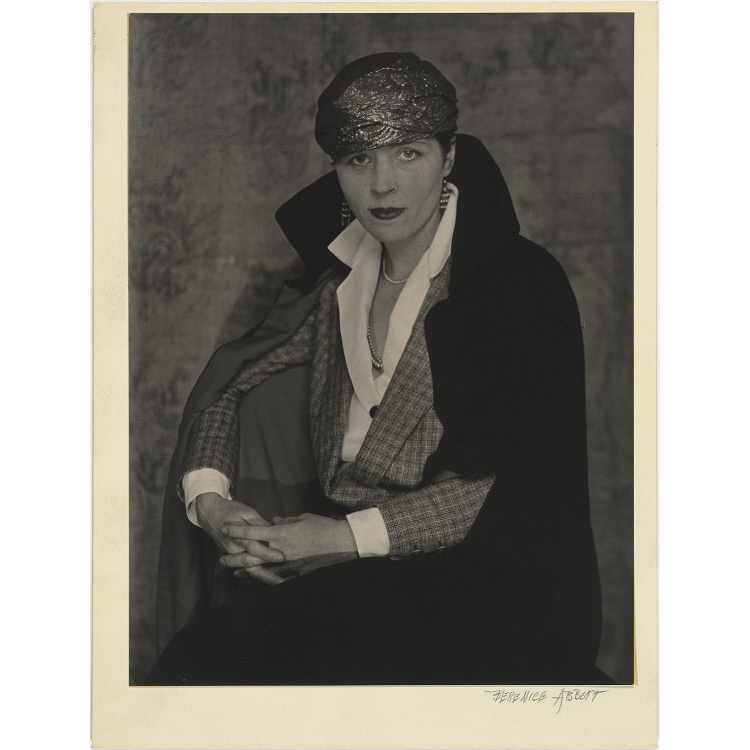
Djuna Barnes’ Nightwood, through the distinct lense of queerness, explicates the intrinsic trend towards feelings of ambivalence and gloom in the face of unrequited love. In the novel’s protagonist, Nora, and her interactions with the oddity that is Dr. Matthew O’Conner, the sentiments of melancholia and depression are presented as symptoms of relevance within a greater malicious entity—the “night”. This discussion of the “night” is spurred by Nora who, feeling lost after her lover Robin Vote fails to return home and fearing her infidelity, asks Dr. O’Conner to “tell me everything you know about the night” (86). Barnes through the voice of O’Conner delves into this queer space of explicit sadness and attempts to elucidate the dangers associated with the constant association and wallow in disparity. Barnes fixates on the queer subject’s loss of identity when in contact with the “night”, as constant approximation stokes the airs of melancholia—perpetual grief. Nightwood attempts to destigmatize queerness through its representation as encompassing the same relationship woes which plague their heteronormative counterparts. And by linking these heteronormative conventions, Barnes is able to reify the ultimate humanistic trend which intrinsically links both marginalized and heteronormative, grief and sadness in the face of unrequited love. But more importantly, Barnes pinpoints the danger of internalizing these sentiments, as their adoption degrades the ego.
Barnes’ Nightwood uses the imagery of the “night”, the space of explicit queer sadness, as a way to enumerate the explicit trends which bring about the creation of “the Beast”—the metaphysical temperament, and embodiment of, queer melancholia. Barnes presents this unraveling of ego through a medium that revels in interpretation, the novel. In her stylistic approach, Barnes uses abstract and verbose language which not only reifies the density of the subject matter but also somewhat shields her intention from the general consciousness. Inviting both the author and audience to commune on a level which is explicitly filtered—and in the safe-space Barnes constructs, the queer “Beast” can roam unhindered by the heteronormative oppression.
Nora’s divulgence into the night, while spurred from unrequited love, is presented as a symptom of constant association with ambivalence and the internalized self-weaponization of the ego. Through Barnes posits the “night” as both an abstract and transformative entity, Dr. O’Connor expresses a sentiment that cautions against distinct personal revelance within this space. O’Connor explains, “Though some go into the night as a spoon breaks easy water, others go head foremost against a new connivance; their horns make a dry crying, like the wings of the locust, late come to their shedding” (87). Barnes’ use of metaphor here explicates the modes in which the “night” brings about a metamorphosis that induces permanent change. However, this model proposed by Dr. O’Connor highlights the unconscious nature of this particular change, further layering/complicating the uptake of Barnes’ message. Though, in O’Connor’s use of dehumanized language—such that as the “horns” and “wings”—he purposely hints at the relationship between the “night” and the queer human condition. Wherein, the queer subject, under the oppression of the heteronormative majority, is forced to toil in subjugation—leading this proposed metamorphosis into the “Beast”.
This transformation is not only spurred by unrequited love, as exemplified by the narrative’s protagonist Nora but rather the unconscious ego degradation due to heteronormative policing efforts in individual—mostly queer—expression. Barnes writes, “The brawl of the Beast leaves a path for the Beast. You wash your brawl with every thought, with every gesture, with every conceivable emollient and savon, and expect to find your way again” (91). Thus, the queer fixation on expressing an identity that may deviate from the social expectation expedites this metamorphosis process. Though O’Connor emphasizes the co-dependent nature of both the “Beast[‘s]” creation and its supplication, the paradigm’s cyclicity is revealed to be conducive to sentiments of gloom and ambivalence. This metamorphic cycle perpetuates melancholia and allows for the queer subject to not only revel in self-depreciation but to reify their connection to ostracization. As Barnes writes, “We will find no comfort until the night melts away; until the fury of the night rots out its fire” (91). Thus, the supposed upward trajectory from this space of sadness is through the reckoning of queerness—both on the levels of the social and individual consciousness.
Barnes’ novel speaks to the very real, almost intrinsic queer disposition towards feelings of ambivalence and melancholia when faced with the heteronormative majority. Through the constant subscription and internalization of narratives of heteronormative ideals—those such as happiness, family, and social expression—the queer subject is not only made to be viewed as deviant but explicitly diminutive. Barnes’ narrative uses this proposed social schema to reckon with, and propose a way to thwart, the darkness of the “night” as its supplication is fixated on the subject’s spacial consciousness. This novel pushes conventional ideas of gender and its expression, but more importantly, Barnes gives voice to—and then sufficiently quells—the nagging subconscious disposition towards melancholy within queer subjects. While also providing a guide, O’Connor, to help bring about the day. While Barnes’ narrative may represent an aspect of queer culture that may not fit the mold of conventional expectation—that being the mirroring of the heteronormative nuclear unit—her text gives us a version of queerness that is explicitly flawed. Just as heteronormative relationships are given the freedom to deviate from the social perceptions of happiness, Barnes produces a text that is both very queer in its representations and somehow encompassing of an experience that is not limited to the queer subject—heartbreak. Nightwood serves as an examination of the factors which lead to queer divulgence in melancholia, and the subconscious metamorphosis which accompanies the internalization of ostracization from the heteronormative. This is further complicated by the personification of queer malice through the creation of the “Beast”. Though Barnes’ narrative proposes that the “Beast” stems from the violence and grief associated with constant alienation and self-abashment, she specifically pushes the aspects of self-policing which stoke its creation. And as O’Connor cautions Nora, the goal of the queer subject should be the domestication of the “Beast” through acceptance, not extinction which feeds the cycle of perpetual grief and toil under the ignorant majority.
Works Cited
Abbott, Berenice. “Djuna Chappell Barnes”. 1926. National Portrait Gallery.
Barnes, Djuna. Nightwood. New Directions, 2014.

