
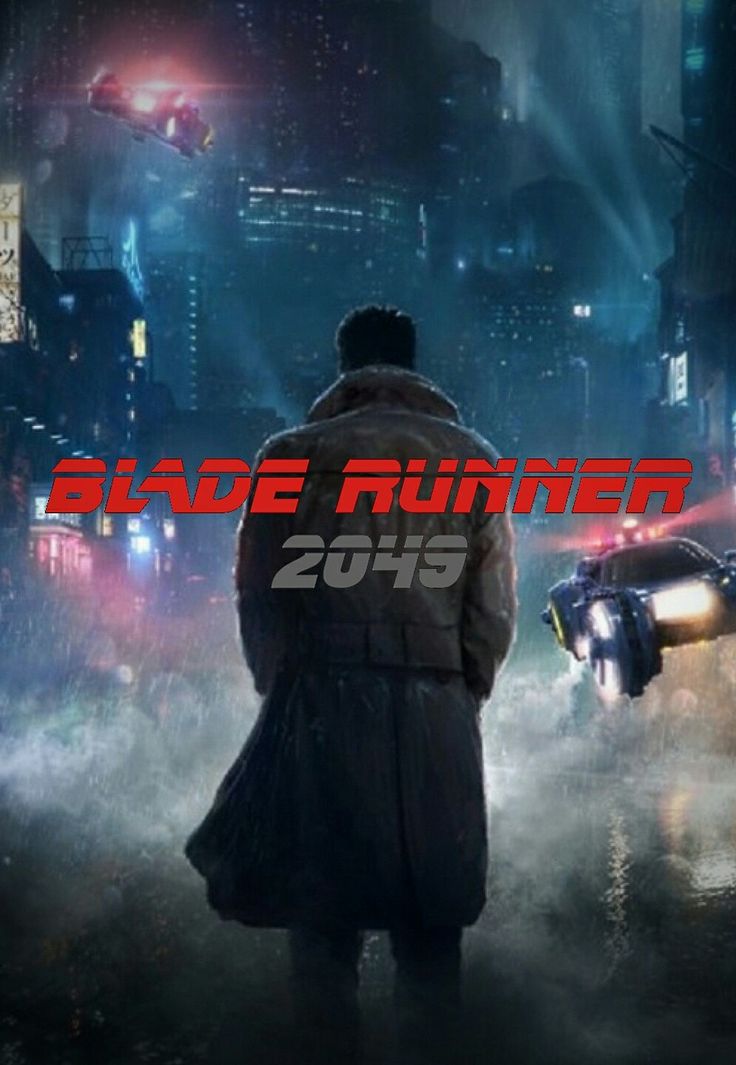
Blade Runner 2049 is the sequel to the cult-classic sci-fi Blade Runner. Set in the far flung future of 2049, the story revolves around ‘replicants,’ artificial humans created for various labor purposes. Older model replicants would periodically go rogue, escaping from the purposes they were designed to live among humans. Those who hunt replicants are known as ‘Blade Runners.’ The story follows K, a replicant referred to only by his serial number, who works as a blade runner hunting down these older models. 2049 deals with themes of memory, failure, and alienation. Fundamentally, though, it is about loss. It is a story about losing your past, your future, and even your identity.
The story begins when K discovers the corpse of a replicant who gave birth- something supposedly impossible. Alongside the corpse, he discovers a carved wooden horse with a date carved into the bottom. The horse features in K’s memories, memories that were supposedly manufactured and entirely false. He is charged with hunting down and destroying the replicant child, even as he, discovering more and more evidence of the truth of his memories, begins to suspect that he himself may be the child.
It comes to a head when K tracks the child’s father: Deckard, the protagonist of the first Blade Runner movie and a former blade runner who had first been involved with the case of the child’s mother. K believes that Deckard knows the location and identity of the child, and goes to Deckard . Before he can confirm one way or another, Deckard is kidnapped, taken by forces who seek to give all replicants the ability to reproduce to create a cheaper workforce. K is knocked unconscious, and dragged to a secret conclave of rebel replicants, devoted to the care and protection of the child. He learns that the memories he’s been chasing are not his- they are implanted, replicas of the true child’s memories seeded throughout different replicants. He is not special. Accepting this, accepting his normality, K goes to save Deckard, taking a killing blow in the process. He brings Deckard to his now grown up child, a maker of memories, and then goes to lie down in the snow outside to die.
The movie is about loss. This can be seen just from a summary of the story. K starts out lost, a person without a past. He slowly builds an identity around his memories, finding himself as ‘the child’, only to lose that in turn when he realizes his identities are false. Lost and purposeless, K seeks to reclaim his meaning and identity through rescuing Deckard. In the process, he sacrifices his life, losing his very existence. K’s entire story is about him trying and failing to find himself in his past, only finding fulfillment and purpose when he embraces making decisions to make an identity of his present self.
Deckard and the child also both suffer from loss. Deckard is wracked with guilt and melancholia over abandoning the child, and, though he knows it was the best way to make certain the child was never found by forces who wished her ill, he still mourns his loss of her. He also mourns the death of his lover and the child’s mother- Rachelle. This loss is compounded when, in exchange for information regarding the child, Deckard is presented with a clone of Rachelle, perfect in every way. Refusing the offer, he is forced to watch the clone’s murder, reliving the loss of his love one more time. The child herself, Ana, also suffers from a loss. Her loss is more abstract than the concrete losses that Deckard and K suffers, but no less poignant for it. Ana’s cover story, designed to keep her identity safe, claims that her immune system is compromised, requiring her to live her life in a glass tube isolated from society. Her primary entertainment is the use of holographic machines to construct memories, memories of places she can not visit and friends she can not have. She mentions that she rarely gets visitors, and is seen constructing a false memory of a child’s birthday party that she pretends to interact with, her ‘real’ self fading through the holographic bodies and balloons of the party- a neat visual metaphor of her inability to interact with those outside. The trio of K, Deckard, and Ana form a triangle of losses: K’s loss of his personal identity, Deckard’s loss of his familial identity, and Ana’s loss of her societal identity.
The theme of loss is reinforced by the worlds ambient storytelling, by little moments technically irrelevant to the larger plot. For example, the very world the story is set on has suffered a cataclysmic climate disaster. This is a world where genuine wood is a fortune-making luxury, where most animals are extinct, where slugs are farmed for food because no real crops can grow anymore. This physical loss is compounded by an informational loss: After ‘the blackout’ in 2022 (an event actually covered in a short animated movie set in the world of Blade Runner), almost all non-paper records and information was destroyed. Many of the people of this world, then, live without records of what life was like before, without connections to their past. One mildly mutated archivist remarks that his mother was devastated to lose his baby photos- a moment played for comedy, but one that belies a world of gaps, one where your past is ephemeral and easily lost.
Emotionally, the movie is an attritional slog of pain and melancholia. Even aside from its depressing story, the film creates an atmosphere of sadness and loss. From bleak color contrasts to harsh lighting, the visual language of the movie is one of overwhelming pressure. Though it is incredibly beautiful, it often uses its colors and backgrounds to create a sense of dread, monotony, or pressure. A building the size of three city blocks, dwarfing the viewer with its scale, rows upon rows of maggot-farms stretching to the horizon, an empty radiation blasted ruin of a once-great metropolis- all create a sense of a system too big, of something cold and empty and devastated. The music conveys this sense of emptiness- primarily through not being present at all. Most of the movie has only diegetic sounds, the sounds of machinery or rain or crowds. What music there is is harsh, droning, mechanical, used to underscore moments of mental tension.
Upon first seeing this movie in theaters, I genuinely cried at the end. Not because of the sadness of K’s death – though it was deeply moving – but with relief. The movie had built a world of loss, one where meaning can be erased or bestowed without warning. It had shown us, in no uncertain terms, that everything, from one’s past to their present to their future, can be taken away or lost. It created an atmosphere of pressure, stress, and anxiety. And then, in the end, it gave us a moment of breath. It gives the watcher hope. Even as K bleeds out, it begins to snow, and the movie begins to play uplifting music for the first time. Even as K bleeds out, Deckard meets his child for the first time face to face. Even as K bleeds out, he looks, for perhaps the first time in the movie, content. He has lost his life, but, for the first time in the movie, he has gained something in exchange for the loss: Purpose. This was what caused my relief, my tears. The pressure, so expertly crafted and maintained so it just skirts the edge of unbearable, is for the first time entirely lifted. For the first time, we are offered unconditional hope.
Blade Runner 2049 is about what we lose, yes, but it’s also about what we choose to give away. K gives his life for two people he barely knows, and, through that, finds himself. Though the movie may be grim, dark, and scary, it goes to those dark places not to revel in suffering, but to teach us about how loss can change us, and how we can recover from it.

