
Is It Better to Speak or Die?
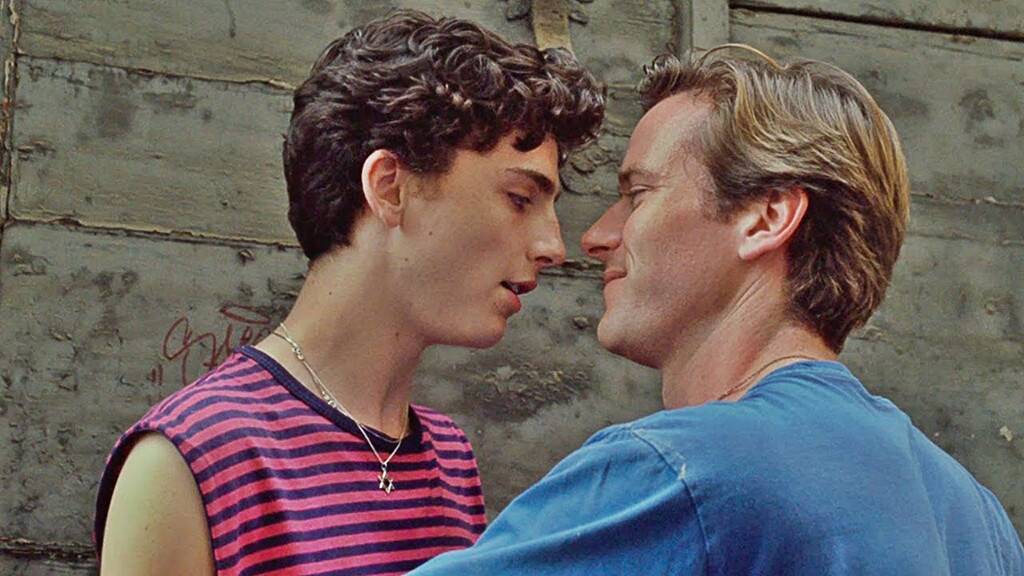
Call Me by Your Name by Andre Aciman is a beautiful love story that explains the relationship between a precocious teenage boy named Elio and an introvert named Oliver. In Italy, at Elio’s parents cliffside mansion, Oliver is being boarded for the summer as a doctoral student under Elio’s father who is an academic professor. While Oliver consistently works on the revisions of his book’s manuscript, he notices Elio. A beautiful, smart and talented teenage boy. As the book divulges into the romance and the passionate connection, they both share with one another, Aciman finds it prudent to point out major significant moments inside the novel. Within the book, Oliver tries his hardest to distance himself from Elio, scared of doing something he might one day become ashamed of. Throughout the book, we find so many moments where both Oliver and Elio fear the persecutions of being in a homosexual relationship. This is showing us how society causes us to conform to a more heterosexual relationship in belief of the “Pursuit of Happiness”.
At first, Elio thought that the feelings he harbored for Oliver were just a cliché. He thought it was just a meaningless attraction for the guest staying in their Italian home for the summer. This was until he found himself becoming sexually aroused at the intoxicating smell of Oliver. After staying up waiting for Oliver after his “midnight sex” with different women and unreturned glances from across the room, Elio tries his hardest to dissuade himself from liking Oliver. He begins critiquing little things such as the ways in which Oliver is incapable of opening an egg or incapable of using words besides “later” when leaving a room. Towards the middle of the book, Elio sleeps with the girl who’s liked him all summer; hoping to diminish the feelings he had for Oliver. One day however, Elio found the guts to write a letter to Oliver and slipped it under his door. He wrote the note admitting that he has feelings for Oliver and leaves an open-ended question asking if he shares the same. Oliver and Elio arrange to meet at midnight, and they find themselves craving the thing they both wanted the most: each other’s love. After sleeping together, Elio’s baffled and confused about his actions from that night. As a teenage boy, he became so confused as to why he said yes to Oliver, but also why he never said no. Oliver hated himself for putting Elio in that position because he knew he never wanted to be in it, in the first place.
Elio’s actions throughout the book caused him to have an ambivalent relationship between himself and his homosexuality. He says “He’ll be with a girl, I’ll be with a girl, and we’re even going to be happy. Every Day, If I don’t mess things up, we can ride into town and be back, and even if this is all he is willing to give, I’ll take it” (Aciman 104). This showed how much Elio pondered the idea of the “American Dream”. He knew that society would never accept him if he’s in a homosexual relationship, but might endure a closeted homosexual relationship between him and Oliver. In his late teens, Elio was so conflicted and confused on the type of person that he saw himself becoming. After having sex with Marzia, a teenage girl in their town, he realized that throughout his entire summer he had been arguing with his body. He tried his hardest to dissuade himself from what he really wanted but could not have: Oliver.
Later, Elio is in the presence of two gay scholarly men in a relationship joining Elio and his parents for dinner. Elio became disgusted, judging them and the femininity that surrounds them. He says “They had both stepped out from either side of the cab at the same time and each carried a bunch of white flowers in his hand…. like a flowery, guised-up version of Tintin’s Thompson and Thompson twins” (Aciman 125). Elio insulted their relationship by comparing them to the twins in Tintin, who were incompetent and only there for comedic relief. I found this moment particularly important due to the fact that Oliver skipped dinner this night and Elio was left with the gay couple on his own. This symbolizes how being in a homosexual relationship and members of the LGBTQ community feel alone or outcasted by society because of there sexuality. Saddened by this, Elio became distraught after realizing that he had more in common with two homosexuals, rather than anyone else he’s ever met in his life.
After the dinner, both Elio and Oliver decided to admit their feelings for one another, leading to their passionate but melancholic love affair. Weeks before Oliver returned home, he and Elio shared what felt like the best moments of their lives with one another. Elio says “What is life without this? Which was why, in the end, It was I, and not he, who blurted out ,You’ll kill me if you stop….bringing the circle of the dream and the fantasy, me and him, the longed words…till he said ‘Call me by your name and I’ll call you by mine’”(Aciman 134). This became one of my favorite moments in the book. It showed how calling each other by the other’s name isn’t just by fault. Elio and Oliver claimed each other without using heterosexual titles like ‘boyfriend and girlfriend’. Instead, they said that they were themselves because of the other and that they belong to each other and nobody else. Isn’t that what we want in life? Someone to become our equal in more ways than one. After they shared numerous entangling moments with one another in bed, they don’t ever say “I Love You”. It’s such a familiarity to them that saying it would just mean another word that can easily fade. Unlike the moments they shared in Rome and the touch of their last embrace which were things that would never fade from their memories. With Rome and the Summer coming to a close, Elio and Oliver both returned to their corners of the world. Oliver went back home and Elio went back to his Italian Riviera before returning to school. More confused than ever, he found himself dwelling on the death of his love with Elio. His father says “You had a beautiful friendship. Maybe even more than a friendship. And I envy you…Withdrawal can be a terrible thing, and watching others forget us sooner than we’d want to be forgotten is no better. We rip out so much of ourselves to be cured of things faster that we go bankrupt by the age thirty” (Aciman 224). A beautifully written scene where Elio’s father says he “envies him”. He envied his willingness to love. In today’s society, so many people within the LGBTQ community are scared to share who they are with their families or of being judged or not loved. Aciman shares this scene to show the purity and intimacy in a relationship that others would judge because of their age gap. In the future, Oliver marries a woman and has two children. Elio and Oliver reconnect when Elio is in his late forties and Oliver in his fifties. This rekindling proved that their flame for one other never blew out but was instead snuffed out by society’s heterosexual views.
This entire book shows how unfortunate it is that as a society, we conjure up so many melancholic thoughts and opinions around LGBTQ when we should be encouraging love. One of the scariest things a person could do is give themselves to another person. This artifact spoke to me because I was in a relationship. It was intense, unadulterated, and wholesome in more ways than one. Only to turn sadder than I’ve ever been in my life. It led to panic attacks, depressive states, and even a lack of communication with those around me. In the end, I realized how easily we throw our entire selves at love. Being inexperienced, I found Elio and Oliver’s relationship so powerful until their story turned just as sad as mine. We shouldn’t care whether a person is lesbian, gay, or in a trans relationship. Call Me by Your Name expresses just that, by showing that life does go on but little things such as an apricot or six weeks in the summer can stay with us forever. That love or loving anyone is hard, so why do we make it harder for others?
Works Cite
Aciman, Andre. Call Me by Your Name. Picador, 2007.

