
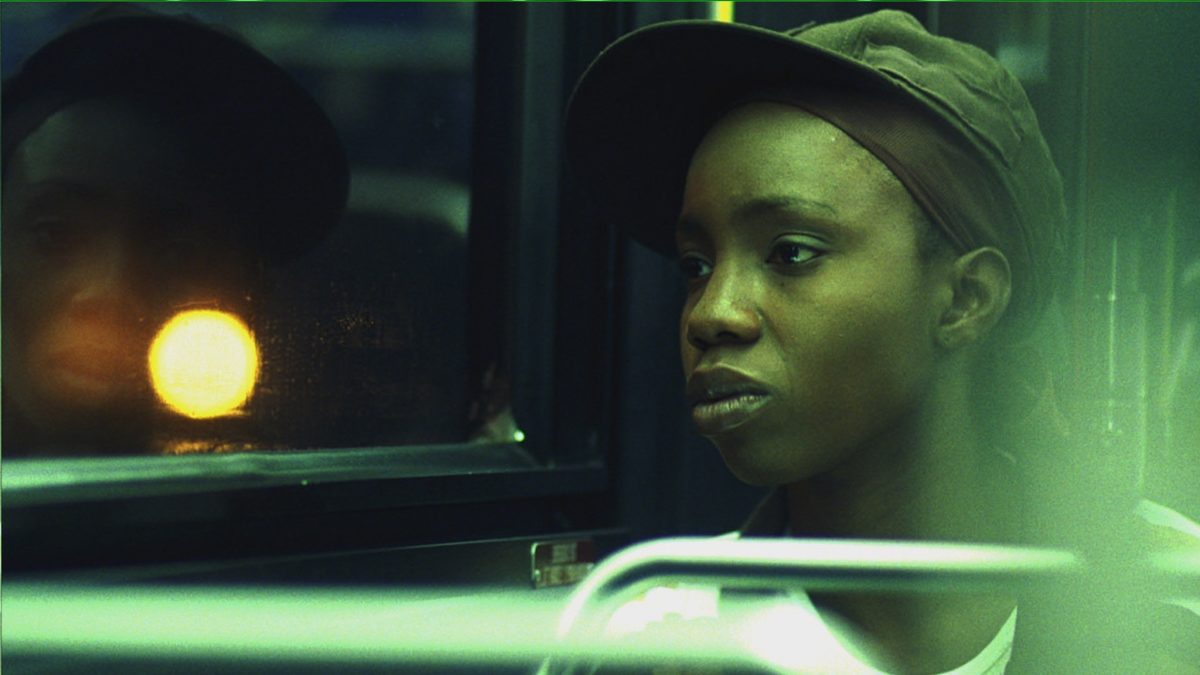
Queer cinema is rapidly expanding, with more diverse and inclusive narratives being told. While we have seen an increase in diversity and representation, the majority of films about queer identity and queer coming of age, are centered around white, cis gender men or women, that embody a very conventional and socially acceptable queerness. Lesbian narratives that are more well known and integrated in mainstream media have been predominately portrayed by white cis gender women, who still maintain a traditional beauty and ideal femininity. Pariah was the first queer film I saw where not only was the protagonist a person of color, but they strayed from the mainstream, palatable queer expression. It is because of films like Pariah, that exposed the world to these kind of narratives, that filmmakers are able to depict queer people of color in their films and expand on the very limited type of queerness that was deemed acceptable. The themes of this course, such as loss and feeling alone are evident in this film.
The film Pariah, directed by Dee Rees, is first and foremost a coming of age film, which is about a 17 year old black girl. Pariah explores the life of a closeted lesbian named Alike, growing up in Brooklyn and her journey as a queer person in a religious, homophobic environment. Alike, also referred to as Lee, is the protagonist of the film and the character we follow on her journey of self discovery. Alike goes through the universal challenges of trying to figure out where she belongs, and through the relationships she has with her friends and parents, she is able to accept herself and embrace her identity. The film was released in 2011, and received much praise from the queer community, primarily for its diversity and being one of the few movies at the time that portrayed queer people of color.
When we first meet Alike, it is at a strip club with her best friend Laura. Alike is visibly uncomfortable, and is unable to interact with any of the women there. Laura is a stud, meaning she is a lesbian that identifies with her more masculine traits. At the beginning of the film we see Alike, mimicking this style, and following in Laura’s footsteps. Laura is Alike’s only insight into the lesbian community, so she is only exposed to a very specific facet of lesbian culture.
However on the other extreme, Alike’s mother wants her to dress more feminine and get rid of her “tomboy” look. Alike is torn by this because she doesn’t resonate with either of these identities, but lacks the knowledge or confidence to cultivate her own identity. It is not until Alike meets Bina, the daughter of her mother’s friend, that she discovers a middle ground. After spending time with Bina, and getting introduced to new art and music, Alike begins dressing exactly like her. She quickly becomes a love interest in the film, and through their short, yet impactful relationship, Alike come out of it with the necessary tools to stand up to her parents and form her own identity.
Alike’s transformation is most noticeable in the way she dresses. One of the first scenes in the film, depict Alike on the bus ride home, changing out of her baggy, stereotypically butch appearing clothing, into a more fitted t-shirt with rhinestone letters spelling “Angel”. Her mother praises her when she gets home saying the shirt compliments her figure, which makes Alike uncomfortable. This reinforcement of traditional femininity through gender specific clothing adds to Alike’s confusion and lonesomeness. Since Alike is extremely unsure of herself and lacks confidence, she imitates an identity she thinks she should have, and morphs herself in order to please others, and this occurs with Bina as well. While they bond over a shared interest in music and writing, over time we see Alike begin to copy Bina’s style, dressing in similarly bright colors and scarfs. Alike does this to fit in and impress Bina, once again losing herself in an identity she thinks she should have. Alike quickly develops a crush on Bina and the outcome of their relationship was instrumental in her coming out. Alike and Bina attend a party together, and when the return back to Bina’s home, they have sex. However, similarity to many other queer narratives, after they have sex, Bina feels uncomfortable and tells Alike to forget it. She stresses that she is not gay and what happened the previous night was a mistake. Alike is heartbroken by this and shortly after comes out to her parents.
After Alike came out to her parents, and was badly beaten by her mother, she left home and stayed with her friend Laura. Eventually Alike’s father came to see her in an effort to bring her home. Instead Alike reveals that she has been accepted into an early college program and that she would be graduating early. She says to her father “ I’m not running, I’m choosing”. I found this quote to be extremely powerful and almost indicative of the experience of a queer person in a non-accepting environment. Not only does she mean this in a literal way, but she is no longer running from herself and her sexuality. She is finally ready to be herself and no longer live in fear of rejection.
Alike experiences the loss of her mother, after she comes out. Not in a physical sense but her mother’s reaction to her lesbianism resulted in physical assault. Throughout the movie we see the decline and failure of the marriage between Alike’s parents. Her mother is viewed as the villain and is the one we continually see enforce gender roles and heteronormative standards. She is seen forcing Alike to change into a skirt for church and discourages her from spending time with her best friend, Laura, who is openly gay. Despite the trauma and pain her mother induced, Alike still loves her. Before leaving for college, Alike confronts her mother for the first time since her coming out. She tells her mother she loves her, and her mother does not reciprocate the earnest plea, but instead says, “I’ll be praying for you”. It is a devastating moment in the film because we are unsure if this relationship will ever be repaired, and the love her mother once had for Alike is now gone.
One of the many reasons why I chose this film as my artifact, and why I believe it is so important for queer cinema is because the film has an all black cast and the way race is utilized is very interesting and unique. Due to all the characters being black, there is almost a lack of racial hierarchy, and we are able to empathize with Alike. The purpose of this film was to showcase a queer narrative within a group that is often times excluded from representation. Pariah expertly depicts a young girl that the audience, regardless of gender or race can relate to. Additionally, I can not speak for the experience of people of color who have watched this film, but I would assume being able to see a queerness within a black community, in a way that is separated from whiteness, can be very impactful and empowering.
Pariah is a film that skillfully explores the often times tumultuous coming out process while providing a media for people going through the same struggles and additionally set a precedent for the kind of representation we should expect in queer cinema. Pariah is so important and relatable because of the nuances in the dialogue and utilization of actors that do not necessarily encapsulate the mainstream depiction of queer figures. This sort of representation is unfortunately extremely rare, yet a vital component to the ever-growing genre. Queerness does not only manifest in white bodies, therefore, the films and other media used to express this identity should be representative of that.
Work cited
Dee Rees, Pariah the Movie, Kickstarter, 22 Dec. 2010, https://www.kickstarter.com/projects/619452369/pariah-the-movie
Pariah. Directed by Dee Rees, performance by Adepero Oduye, Focus Feature, 28 Dec. 2011, Starz, https://www.starz.com/us/en/movies/41561

