Posts

Odd Girls and Twilight Lovers: A History of Lesbian Life in 20th Century America

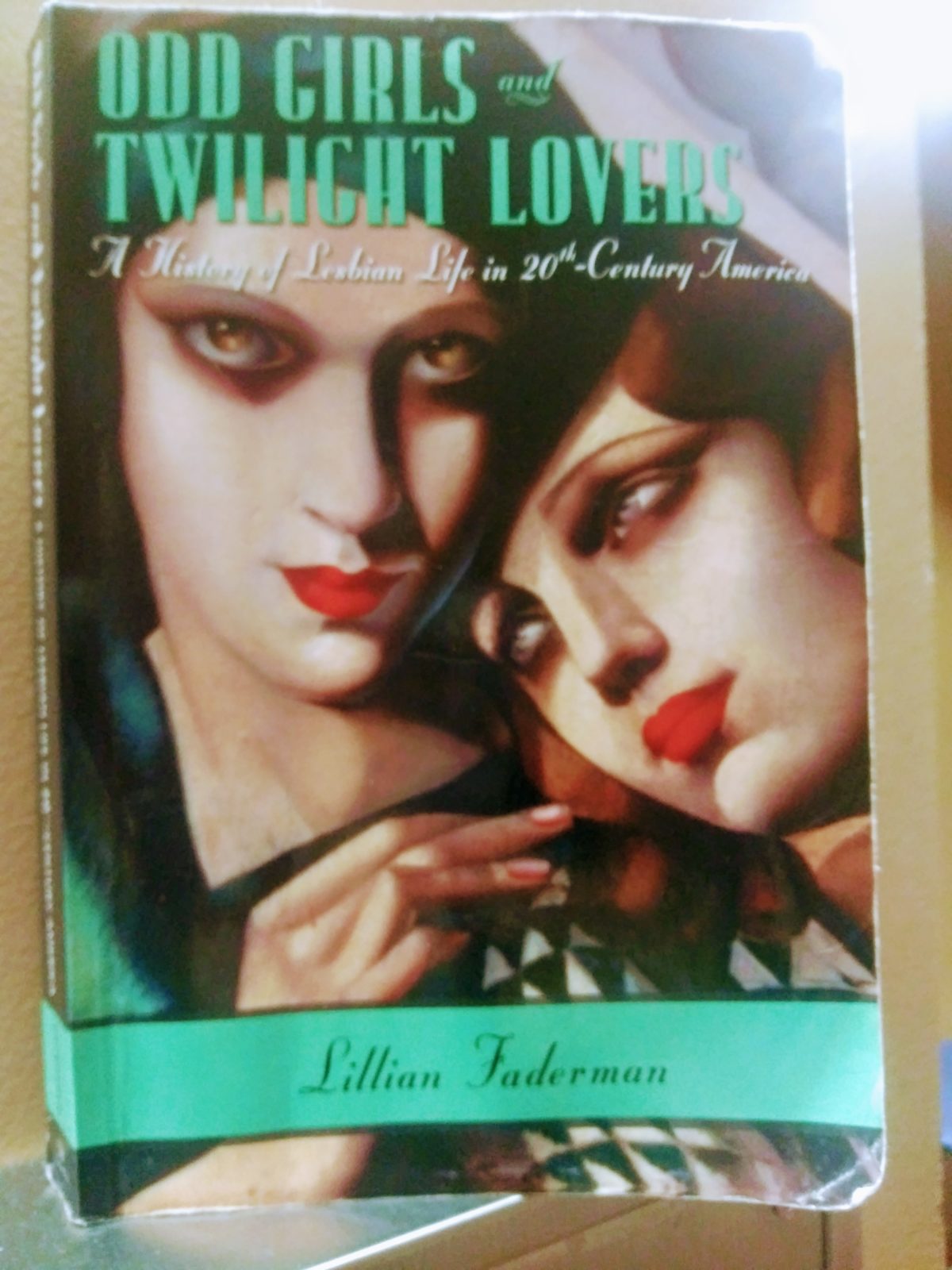
With a deceiving vampire-esque cover, no doubt to give a sensationalist depredatory vibe, Odd Girls and Twilight Lovers A History of Lesbian Life in 20th Century America by Lillian Faderman published in 1991 is actually an academic text whose purpose is to uncover the narrative of lesbian existence during the 20th Century in the US. Despite its promising title, my gut reaction to the cover was that of discomfort at the idea conveyed through lighting that there was some sort of perversion in one woman and girl-like innocence in the other. But it had glowing recommendations so I gave it a chance.  See, every so often I roam youtube to find new vlog videos about butch women, where they discuss their identity. I found one that gave an in-depth description of the history of gender in relationship to lesbianism, with Odd Girls as the source. It immediately earned a place in my “I got to read this!” list. Turned out not to be a disappointment, because the malleability exposed of the conceptualization of love between women is a testament of the potential for change in the treatment and perception of queers in other cultures.

The title, Odd Girls and Twilight Lovers refers to two pulp fiction novels published in the 20th century with lesbian protagonists. Pulp fiction is a genre of literature whose subject matter is “sensationalist” material. Lesbians are supposed to be “scandalous” and the goal is for the reader to voyeur into these “odd” creatures’ lives. The reason, I garner, to use this title is two-hold. One to provoke interest but also to give a historical blurb of circulating ideas about lesbians present during that time.

Also, the cover is not original, it is taken for a lesbian novel called The Well of Loneliness. This might be because it is exemplary of how women interested in women were perceived and treated during that time. What we in these times would be called lesbianism were termed inverts, which meant people who desire members of the same sex.

She starts out discussing the relative acceptance of so-called romantic friendships between women. Followed by the stigmatization of these pals by the creation of the ”diagnosis” of inverts by the nascent field of sexology. And how these relationships were forced to go underground during the late century existing within lesbian subcultures. An interesting force that drove a reassessment of lesbian identity was the second-wave feminist movement. The relationship between this text and the course is that the book traces the development of this particular embodiment of queer identity, how the conceptualization of relationships between women has evolved. It also reveals the social context that probably created melancholic lives.

The supposedly scientific diagnosis of inverts probably made some of these subjects of sexology view themselves as perverse or somehow “broken”; that their feelings were pathological. Fadermann explains that because now this type of sexuality was seen as biological there is was not a moral fault and so homosexuals could “speak out against legal and social persecution.” 

So the term inverts aroused from observations made on working-class women. Faderman points out that “most of them suffered in silence…” but that some of which reasoned that moving and living as men would provide them the means and proximity to large cities with a gay culture where they could pursue their romantic interests. Here is a testament to women to define their own path towards happiness. Middle-class women had more options due to education. Some use the medical term to justify not establishing relationships with men despite the promise of heterosexual marriage as gender normative bliss. 

Odd Girls and Twilight Lovers is not only about the history of stigmatization, but also how women have dared to reject the mainstream formulation of The Pursuit of Happiness and instead choose to define it in there own terms. While there were economic imperatives that allow some to venture out to college campuses, workplace and beyond the fact does not belittle their gutsy. All praise to the spread of education, for it provided means and intellectual justification to live queer lives. And I believe that still holds true to this day, especially if you find yourself in a conservative culture. When the option of being financially independent is available it provides the opportunity for self-determination of gender presentation and romantic pursuits. Because of education, some queer women were able to dodge life sentences of domestic servitude.

So my last point is on the impact of the book.  The fact that how the relationships between women have been viewed has changed so much, if you find yourself in a conservative culture you can imagine that there is that potential.  When I read this I was living in Dominican rep. it made me think about how/whether cultures can be transformed.

The understanding of lesbian existence provide by Faderman is that it is not enough to be gay and brave, people have to meet certain economic and/or educational thresholds to live queer lives.

That is why the existing of working-class lesbian subcultures inspires me, though it is also important to note that working-class lesbians in Chicago or New York and other highly urbanized cities probably do possess a better socio-economic position than gay women elsewhere.

By now you must be wondering if I consider myself a butch woman and the answer is I haven’t reached a conclusion. As far as I’ve read these gendered terms are also racialized with butch exists/ed within white lesbian cultures, black lesbians refer to themselves as studs and in some Hispanic cultures, -like Mexico- marimacho, though it’s one of those reclaim-redefine words. But anything is better than Odd Girl, right?

Works Cited
Faderman, Lillian. Odd Girls and Twilight Lovers: A History of Lesbian Life in 20th Century America. Columbia University Press. 1991.
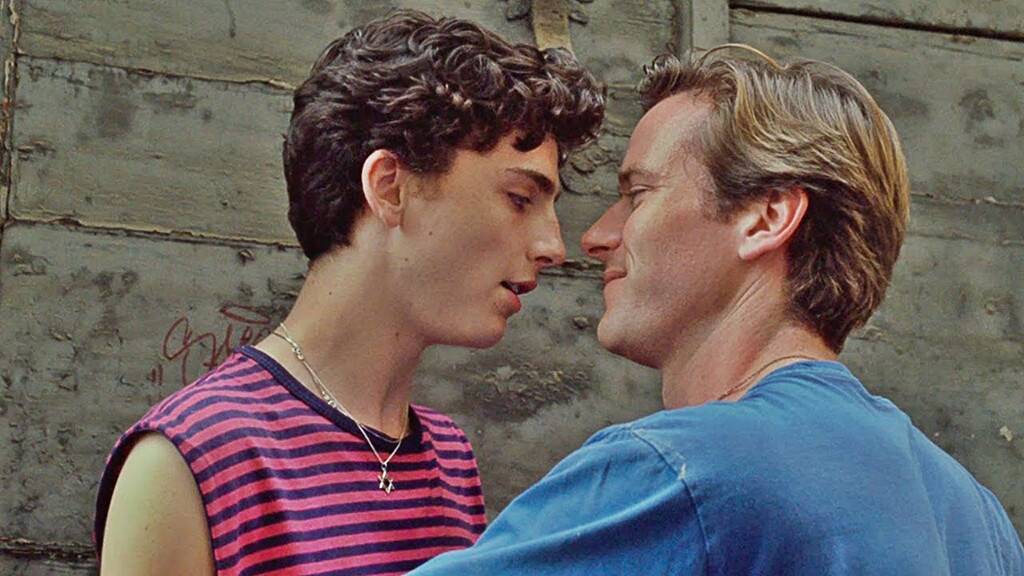
Call Me By Your Name (2007)


Is It Better to Speak or Die?

            Call Me by Your Name by Andre Aciman is a beautiful love story that explains the relationship between a precocious teenage boy named Elio and an introvert named Oliver. In Italy, at Elio’s parents cliffside mansion, Oliver is being boarded for the summer as a doctoral student under Elio’s father who is an academic professor. While Oliver consistently works on the revisions of his book’s manuscript, he notices Elio. A beautiful, smart and talented teenage boy. As the book divulges into the romance and the passionate connection, they both share with one another, Aciman finds it prudent to point out major significant moments inside the novel. Within the book, Oliver tries his hardest to distance himself from Elio, scared of doing something he might one day become ashamed of.  Throughout the book, we find so many moments where both Oliver and Elio fear the persecutions of being in a homosexual relationship. This is showing us how society causes us to conform to a more heterosexual relationship in belief of the “Pursuit of Happiness”.

            At first, Elio thought that the feelings he harbored for Oliver were just a cliché. He thought it was just a meaningless attraction for the guest staying in their Italian home for the summer. This was until he found himself becoming sexually aroused at the intoxicating smell of Oliver. After staying up waiting for Oliver after his “midnight sex” with different women and unreturned glances from across the room, Elio tries his hardest to dissuade himself from liking Oliver. He begins critiquing little things such as the ways in which Oliver is incapable of opening an egg or incapable of using words besides “later” when leaving a room. Towards the middle of the book, Elio sleeps with the girl who’s liked him all summer; hoping to diminish the feelings he had for Oliver. One day however, Elio found the guts to write a letter to Oliver and slipped it under his door. He wrote the note admitting that he has feelings for Oliver and leaves an open-ended question asking if he shares the same. Oliver and Elio arrange to meet at midnight, and they find themselves craving the thing they both wanted the most: each other’s love. After sleeping together, Elio’s baffled and confused about his actions from that night. As a teenage boy, he became so confused as to why he said yes to Oliver, but also why he never said no. Oliver hated himself for putting Elio in that position because he knew he never wanted to be in it, in the first place.

Elio’s actions throughout the book caused him to have an ambivalent relationship between himself and his homosexuality. He says “He’ll be with a girl, I’ll be with a girl, and we’re even going to be happy. Every Day, If I don’t mess things up, we can ride into town and be back, and even if this is all he is willing to give, I’ll take it” (Aciman 104). This showed how much Elio pondered the idea of the “American Dream”. He knew that society would never accept him if he’s in a homosexual relationship, but might endure a closeted homosexual relationship between him and Oliver. In his late teens, Elio was  so conflicted and confused on the type of person that he saw himself becoming. After having sex with Marzia, a teenage girl in their town, he realized that throughout his entire summer he had been arguing with his body. He tried his hardest to dissuade himself from what he really wanted but could not have: Oliver.

Later, Elio is in the presence of two gay scholarly men in a relationship joining Elio and his parents for dinner. Elio became disgusted, judging them and the femininity that surrounds them. He says “They had both stepped out from either side of the cab at the same time and each carried a bunch of white flowers in his hand…. like a flowery, guised-up version of Tintin’s Thompson and Thompson twins” (Aciman 125). Elio insulted their relationship by comparing them to the twins in Tintin, who were incompetent and only there for comedic relief. I found this moment particularly important due to the fact that Oliver skipped dinner this night and Elio was left with the gay couple on his own. This symbolizes how being in a homosexual relationship and members of the LGBTQ community feel alone or outcasted by society because of there sexuality. Saddened by this, Elio became distraught after realizing that he had more in common with two homosexuals, rather than anyone else he’s ever met in his life.

            After the dinner, both Elio and Oliver decided to admit their feelings for one another, leading to their passionate but melancholic love affair. Weeks before Oliver returned home, he and Elio shared what felt like the best moments of their lives with one another. Elio says “What is life without this? Which was why, in the end, It was I, and not he, who blurted out  ,You’ll kill me if you stop….bringing the circle of the dream and the fantasy, me and him, the longed words…till he said ‘Call me by your name and I’ll call you by mine’”(Aciman 134). This became one of my favorite moments in the book. It showed how calling each other by the other’s name isn’t just by fault. Elio and Oliver claimed each other without using heterosexual titles like ‘boyfriend and girlfriend’. Instead, they said that they were themselves because of the other and that they belong to each other and nobody else. Isn’t that what we want in life? Someone to become our equal in more ways than one. After they shared numerous entangling moments with one another in bed, they don’t ever say “I Love You”. It’s such a familiarity to them that saying it would just mean another word that can easily fade. Unlike the moments they shared in Rome and the touch of their last embrace which were things that would never fade from their memories. With Rome and the Summer coming to a close, Elio and Oliver both returned to their corners of the world. Oliver went back home and Elio went back to his Italian Riviera before returning to school. More confused than ever, he found himself dwelling on the death of his love with Elio. His father says “You had a beautiful friendship. Maybe even more than a friendship. And I envy you…Withdrawal can be a terrible thing, and watching others forget us sooner than we’d want to be forgotten is no better. We rip out so much of ourselves to be cured of things faster that we go bankrupt by the age thirty” (Aciman 224). A beautifully written scene where Elio’s father says he “envies him”. He envied his willingness to love. In today’s society, so many people within the LGBTQ community are scared to share who they are with their families or of being judged or not loved. Aciman shares this scene to show the purity and intimacy in a relationship that others would judge because of their age gap. In the future, Oliver marries a woman and has two children. Elio and Oliver reconnect when Elio is in his late forties and Oliver in his fifties. This rekindling proved that their flame for one other never blew out but was instead snuffed out by society’s heterosexual views.

This entire book shows how unfortunate it is that as a society, we conjure up so many melancholic thoughts and opinions around LGBTQ when we should be encouraging love. One of the scariest things a person could do is give themselves to another person. This artifact spoke to me because I was in a relationship. It was intense, unadulterated, and wholesome in more ways than one. Only to turn sadder than I’ve ever been in my life. It led to panic attacks, depressive states, and even a lack of communication with those around me. In the end, I realized how easily we throw our entire selves at love. Being inexperienced, I found Elio and Oliver’s relationship so powerful until their story turned just as sad as mine. We shouldn’t care whether a person is lesbian, gay, or in a trans relationship. Call Me by Your Name expresses just that, by showing that life does go on but little things such as an apricot or six weeks in the summer can stay with us forever. That love or loving anyone is hard, so why do we make it harder for others?

Works Cite

Aciman, Andre. Call Me by Your Name. Picador, 2007.


Esperanza Rising(2000) by Pam Muñoz Ryan

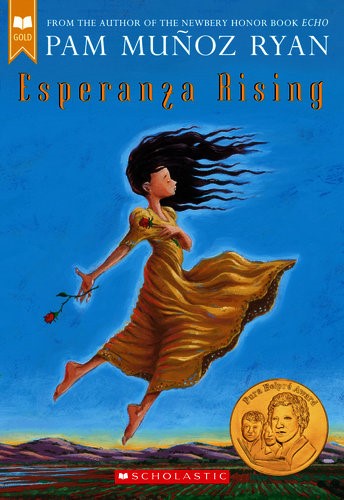
At first glance, Esperanza Rising by Pam Muñoz Ryan;2000; Book, is just seen as another children’s book, however, this novel has many layers to it that it goes beyond this expectation. The cover portrays a fair skin young girl, Esperanza de Ortega, whose long hair and yellow silk dress is flowing with the breeze. She is seen loosely holding a rose over a large plot of land that disappears in the distance, both the land and the rose hold much meaning in her life. I first came across this novel, thanks to the complicated system of school reading levels. Out of the limited number of novels that could have chosen from I chose Esperanza Rising. I saw myself in this novel, as if all that I had lust for at 12 years old was contained in this novel. However, what I would have not imagined that under many layers of meaning, hides a melancholic twist, as Esperanza mourns the death of her father throughout most of the book, she also mourns the loss of what her life used to be, developing a ambivalent relationship to the land, which in a way represent the changes in her life.

The novel depicts the life of Esperanza de Ortega, daughter of a wealthy landowner in Mexico, Sexto de Ortega who must go through different obstacles at a young age for her own as well as her family’s safety. The novel starts off describing Esperanza and her father connecting to the land, by attempting to hear its heartbeat. Ryan then goes on to explain the importance of the preparations for the harvest which terminate in Esperanza’s birthday. It is during this time that there is a large celebration in honor for Esperanza and the fruit harvested from the ranch. Up to this point Ryan, describes what happens every year and the illustrates happiness during this time. However, things get complicated when the Ortega family discovers that the head of the family, Sexto de Ortega has been killed.

This brings a variety of complications due Esperanza’s uncle who practically threatened the Ortega family if Esperanza’s mother, Ramona de Ortega does not marry him. To escape the threats, especially after the burning of their mansion Esperanza and Ramona decide to flee to California along with their former servants Alfonso, Hortensia, and Miguel. Esperanza’s grandmother had to stay in Mexico in a convent, as she healed from injuries caused by the fire. At such a young age, Esperanza experienced such a drastic life changed that affected her various ways, throughout most of the book she spends her time comparing of what her life once was and what she had to deal with now in the given circumstances, living in a Mexican labor camp. As she struggles with her own internal conflicts, she is faced with a much bigger issue in which her mother gets hospitalized and she is left to pay off medical expenses as well as for her grandmother’s voyage to California.

Melancholia can be seen creeping in here, beyond her father’s death but more precisely through the drastic changes she had to go through at 13 years of age. Her father represented what was good in her life and she lost all that when he left, at time she finds herself thinking what her father would have said of the living situation in the migrant camp if he was there. The death of her father goes beyond that just a loss of paternity for her, but it actually contributes to her loss of self. She compares what her life used to be when her father was around and what it is now especially when referring to birthdays. Esperanza explains how on her birthday there would be a process that would repeat each year from her favorite breakfast being served to the extravagant party thrown in her honor but the crucial part of each year where the porcelain dolls. Each year on her birthday she would receive one from her father. Esperanza treasures these dolls as she connects to them, she sees her own life reflected in their appearance. However, this now represents what her life will not be due to her given situation.

The land is also very important to consider here as it plays a crucial role in Esperanza’s persona. From a young age she develops a connection to the literal land and what it stands for, often seeking comfort and identity. Towards the middle of the book, Esperanza is seen falling into a deep state of melancholia, in which she begins question all that her life is and its worth stating, “Do you have some prophecy that I do not? I have lost everything. Every single thing and all the things that I was meant to be. See these perfect rows, Miguel? They are like what my life would have been. These rows know where they are going. Straight ahead. Now my life is like the zigzag in the blanket on Mama’s bed.” (Page 224) She begins feel once again these ties, the Ranch of Roses, her life, her plans, things that she has not brought herself to let go. Relocated in a migrant camp, she is safe and can start a new life but with everything going she can not help but develop an ambivalent relationship towards the land and her life in the United States.

Personally, I understand and relate to Esperanza’s melancholic views, since I had many transitions to due at a young age. Since I was very little I had to move from city to city and from country to country, leaving a piece of me within each place I went. This is something that immigrants from across the world can understand and relate to as well, as many of them are seen sacrificing everything that they are and have in search for a stable location to live a calm and safe life. They understand starting over, in a new place away from their traditions and what once was familiar to them leading them to overthink their past and incorporating this in their present lives instead of letting go.

It is surprising to find ideas such as melancholia in a children’s book and yet they are there in the catacombs of each dilemma. Esperanza’s struggles lead her to develop a melancholic relationship with the land and her new life in California, while mourning her life in Mexico as well as the death of her father. These ideas, however, are relatable to many especially the immigrant community and to those that lose themselves in the changes that life takes them.

Citation

Ryan Pam Muñoz. Esperanza Rising. Scholastic Press, 2018

“Esperanza Rising.” Booksource, www.booksource.com/Products/Esperanza-Rising__043912042X.aspx.

Prayers for Bobby (2009) by Leroy F. Aarons

Prayers for Bobby is a 2009 film that depicts the issues that queer individuals face when their families learn of their homosexuality. The film is based on the 1995 book Prayers for Bobby: A Mother’s Coming to Terms with the Suicide of Her Gay Son by Leroy F. Aarons which recounts the real-life tragedy of Robert (Bobby) Griffith who committed suicide in 1983. The film’s protagonist, Bobby Griffith, is a high school student who lives with his devout Evangelical family in the late 1970s. Bobby is contemplating suicide when his older brother Ed walks in on him and begs him to tell him the reason for his distress. Bobby confides in his brother that he thinks he is gay and asks that he keep this a secret from his conservative family. Ed betrays Bobby and tells their mother, Mary, out of concern for his wellbeing. Mary immediately seeks to “cure” Bobby of the affliction of homosexuality. Mary sends Bobby to a psychiatrist and forces him to participate in various church activities as well as setting him up on dates with girls. Bobby’s father and siblings eventually accept Bobby’s homosexuality while his mother refuses to do so and instead fervently attempts to “cure” him. Bobby did everything Mary asked him to in an attempt to reconcile their relationship, but nothing he did was good enough. This eventually led him to become very withdrawn and depressed because of the guilt he felt from his mother’s homophobia. His self-loathing became unbearable, and Bobby ultimately committed suicide by jumping off a bridge. Mary cannot cope with the guilt she feels as she thinks she is responsible for Bobby’s death. She seeks comfort from her church but quickly realizes the prejudiced and homophobic preachings of her church are of no help to her. She reaches out to the LGBT community, particularly the Metropolitan Community Church, and eventually becomes a member of the Parents, Families and Friends of Lesbians and Gays (PFLAG) organization and fights against homophobia in Bobby’s honor. This film is a prime example of the psychological damage that rejection has on a queer individual and the obstacles that these individuals face in the pursuit of happiness within a homophobic society.  

Bobby was not able to cope with his mother’s rejection and his psychological state deteriorated rapidly as a result. This is, unfortunately, something that many queer individuals experience as a result of the homophobic attitudes that surround them. In this particular film, the outcome is tragic and results in the death of a queer individual who was rebuffed by his mother despite his attempts to rationalize with her. He eventually reaches a breaking point and begs his mother to accept him for who he is. She refuses and she declares that she will not have a gay son to which he replies “Then you don’t have a son.” He then decides that his best option is to leave his home and make a new life for himself somewhere else where he does not have to feel constantly berated for being gay, but it quickly becomes obvious that he is not able to escape from her homophobia. After a year of constant homophobic preachings and remarks, Bobby had internalized this homophobia, making himself feel ashamed and guilty for being gay, making it impossible for him to find any solace in his new life away from his mother. 

Bobby’s pursuit of happiness was thwarted by his mother’s homophobic crusade to “cure” him. Bobby was a once vibrant young man who had a great relationship with his family until he could no longer deal with denying his own identity. Prior to his coming out, Bobby and Mary had a loving relationship, his siblings even teased him for being his mother’s favorite child. This all changed drastically when Mary’s homophobic beliefs led her to push Bobby away. Her idea that she could “pray the gay away” through conversion and therapy only ruined Bobby’s mental and emotional health. She constantly reminded him that he would end up in hell if he did not change. Though Bobby attempted to be happy by leaving his mother’s home in California and building a new life for himself in Portland he was ultimately unable to distance himself from her homophobia. Bobby was living a seemingly pleasant life with his cousin but his mother would not let him live in peace. She continued to persecute him by sending him pamphlets that claimed AIDS was God’s punishment for homosexuality, leading Bobby to feel incapable of being happy. This inability to achieve happiness is a common theme present in other queer works such as James Baldwin’s Giovanni’s Room. The protagonist in this story, David, is unable to live the life he wants because of the ambivalent feelings that stem from his internalized homophobia. Homophobic society has a profound impact not only on the psyche of queer individuals but on their ability to pursue happiness as it denounces queer individuals as unworthy of obtaining real happiness or love. 

The film depicts the severe impact that loss has on all individuals affected by homophobic attitudes. Throughout the film, we can see the love that Bobby has for his mother and the pain that he felt when he realized that she no longer loved him the way she did before. This feeling of loss contributed to the overwhelming psychological affliction that engulfed him and eventually led him to take his own life. There was one particular scene after Bobby’s death in which Mary is going through his belongings that I found to be a turning point in the film. She finds Bobby’s journal and reads the entries where he expressed his feelings of dejection and self-loathing as a result of her homophobia. He desperately wanted to win back his mother’s affection by doing everything he could to appease her, but nothing he did made him feel anything but rejection and hate on account of her religious beliefs. This is the moment in which Mary realizes that she was the catalyst in Bobby’s psychological turmoil and she sees the dangers of homophobia fueled by religion. She ultimately changes her ways and ends up fighting against the homophobic religious teachings she once staunchly defended. I found this aspect to be especially important because I see this behavior within my own Catholic family. They are very religious and often express their homophobic views which makes me angry not just at them, but at religion as a whole. It’s a difficult subject to address since religion can be a delicate subject but I’ve had many bad experiences with religion myself, as my parents forced me to attend retreats and prayer meetings for years, which led me to experience firsthand the bigotry and intolerant principles of religion. I think that Mary’s realization of the backward ideology preached by her own church is something that more people need to face particularly in this time where the LGBTQ community has gained more rights but is still suffering the impact of homophobia. It is important to realize that though we are living in a more progressive time, there continue to be individuals like Bobby who find themselves oppressed by homophobic families.

I think the fact that this is a true story makes the film even more impactful and makes the consequences of homophobia more genuine to the viewer. The pain that Bobby experienced as a result of his mother’s homophobia is palpable throughout the film and it emphasizes the message of the film. Mary’s radical change from rejection to acceptance is what strikes me as the most surprising element of the film. Religion is a central aspect of her and her family’s lives, it was something that brought them closer together until Mary used it as validation for her homophobia and rejection of her son. She was not able to realize the damage that it caused her son until it was far too late. Only after his death did she recognize the error of her ways and she sought to make things right by doing her part to prevent the spread of homophobia through religious teaching. I think the film conveys this message to its audience, some of whom may find themselves in the same predicament as Bobby as these feelings of melancholia and loss are experienced by many individuals upon coming out to their families. Homophobia continues to plague the LGBTQ community despite the progress made in the movement for equal rights. The psychological damage that rejection has on queer individuals needs to be addressed, particularly by conservative communities who consistently preach homophobic ideology. I think everyone, especially those who have a queer individual in their lives, needs to see this film in order to understand the tragic consequences of homophobia and the longlasting psychological trauma it inflicts on the queer community.

Works Cited:

  1. Aarons, Leroy F. “Prayers for Bobby.” YouTube, directed by Russell Mulcahy. 10 Dec. 2019, https://www.youtube.com/watch?v=sqIF50lSNVo
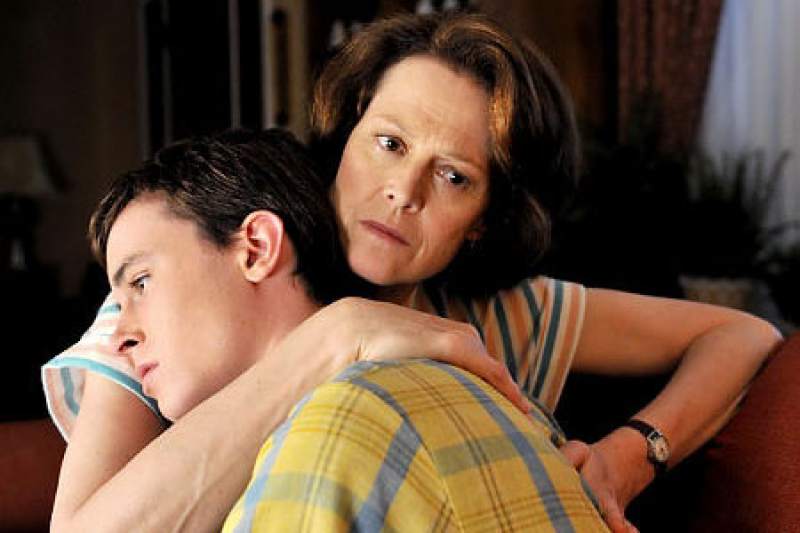
  2. Holzberg, Ben Mark. Photograph of Mary (L, Sigourney Weaver) hugging Bobby (R, Ryan Kelley) from the Lifetime Original Movie, “Prayers for Bobby.” The Press Democrat, 23 Jan. 2009, https://www.pressdemocrat.com/news/2259867-181/lifetime-tv-to-show-film
  3. Baldwin, James. “Giovanni’s Room.” Alfred A. Knopf, 2016.

Muxe Mexico’s Third Gender (2013) By Vice Media

First Vogue Mexico Cover Page on Muxe

In a short documentary created by VICE Media, Mexico’s their gender is introduced as Muxe. This documentary was created July 18,2013. In the state of Oaxaca, Mexico there is a small town by the name of Juchitan where everyone is accepted regardless of their sexuality. In Juchitán there are three genders, male, female, and muxe. A muxe is a person who was born a man but doesn’t act masculine, a muxe falls in between a male and female. Although muxes are accepted, there are some limitations and obligation a person who identifies as a muxe has to abide by. Many of the Muxes of Juchitan, Mexico live a lonely life because they’re not allowed to date or find a partner, and if they do, they’re risking the acceptance and support they receive from their families and community. In class we talked about rejection and how important the role culture plays in our identity, for instance, in Borderlands/La Frontera: The New Mestiza by Gloria Anzaldúa, she mentions that in order to be acceptable to one’s own culture, one must put their individuality behind and live to fulfill what society labels acceptable. 

In this short documentary provided by VICE Media, Muxes are men who resemble to be more feminine than masculine. One of the muxes shown in the film, Viviana states the difference between a homosexual and a muxe is that a homosexual man is attracted to another homosexual man, and a muxe isn’t attracted to other muxe they’re attracted to a heterosexual men. In this community, of Juchitan Mexico, everyone including muxes are accepted for whom they are but this acceptance comes with a price. Muxes are allowed to do everything anyone else can do, except for one particular thing that is prohibited. Muxe are prohibited to date, live with a partner, or have their partners coming to their front door looking for them. Muxes also hold the responsibility of taking care of their parents as they age since their siblings are most likely to get married and move away. Viviana also informs the viewers that muxes of Juchitan are dedicated to working, paying bills, and providing for the family once the other kids move away and have to provide for their own families. Muxes are very much appreciated because of everything they do for their families. Providing for your family is a part of cultural identity because at some point many of us are expected to help out, whether its leaving our role as kids and becoming parents to our younger siblings or by finding a job to help our single parents get through tough financial situations.

A second muxe that was shown in the film was Paola Lopez, who expands more on what it’s like to be a muxe. Paola lets us know that life in Juchitan, Mexico is a bit fun because you get to be who you want to be freely, and also spend time with other muxe that you can relate to and who will understand you. On the other hand, she also lets us know that it can be nostalgic, sometimes because people accept you as you are but don’t accept you having a partner. For a living Paola makes and sells snacks, if people were to find out that she was seeing or living with someone, the people wouldn’t buy anything from her because everything of hers would be considered anti-hygienic. When this scene about anti-hygienic products come to place, it seems like the community isn’t very accepting, instead this seems to be a sign of homophobia. Paola also states that sometimes being a muxe is living a lonely life because after your parents die, you are left with no responsibility and no one living with you. 

A scene from the film that was touched on was the transition many muxes choose to make by taking hormones or injecting oils into their bodies. Kenia is another muxe who talks about her experience and the experiences of other muxes who injected oils into their bodies to appear to have more feminine features than masculine. Kenia tells us of the dangers these steps of injecting themselves with oils that contain chemicals that may obstruct their veins or joints. Not only does Kenia inject oil into her body, but she has also had gone through many surgeries to appear more women than men. Viviana also shares an experience of how she started to take hormones at the age of 14 in order to grow her chest, grow hips, and develop some curves. Viviana also mentions that it’s a very emotional change, because she finally gets to go to sleep like a woman and wake up like a woman, there’s no need to hide who she really is. This form of changing your appearance in another way that this can affect cultural identity, because a woman is only a woman and can be treated like a woman if she looks like one. This is what Gloria Anzaldua means when she says we have to refrain from being who want to be and live by what our culture or society marks as acceptable (20). 

To better understand why muxes choose to abide by the rules of society in Juchitan, Mexico is because they’re afraid of rejections, Gloria Anzaldua states, “to avoid rejection, some of us have to conform to the values of the culture, push the unacceptable parts into the shadows” (20). Sometimes in order to live a peaceful, and accepted life one must put their individuality behind and live to fulfill what others mark as acceptable even if it costs you your happiness. Reflecting back to Paola Lopez who tells us of the lonely life many muxes face shows us that even if this town supposedly accepts muxes for who they are, they still don’t fully accept them because they don’t let them have a partner to spend the rest of their lives with. So how happy can a muxe be if they’re lonely for half their lifetime? Anzaldúa felt oppressed by her culture, she felt like it was an obligation to follow a specific regime that was acceptable to her culture, “I had to leave home, so I could find myself, find my own intrinsic nature buried under the personality that had been imposed on me” (16). Anzaldúa left her home because she was afraid of being judged/criticized for who she wanted to be, so why can’t muxes do the same, leave and find a place that they can call home where they’re fully accepted for who they are and who they choose to spend their life with. 

When I first learned about muxes Mexico’s third gender was in my women’s psychology class. I found this fascinating because I’ve never heard of a muxe. I come from a small town in Mexico far from Oaxaca called Morelos and I’ve never heard of muxes living there or existing. I believe that everyone is entitled to be who they want to be regardless of their sexuality. I felt a strong urge to share the Muxe community because although these people feel accepted, it doesn’t quite seem like they are. To not be able to be with someone, find a partner, a soulmate who they can spend the rest of their lives with doesn’t seem to be people who are accepted by their culture/community. Muxes shouldn’t fear not being able to make a living if they choose to find someone to spend their time with. They also shouldn’t be discriminated for being attracted to whoever they want to be attracted to, they also shouldn’t be considered as anti hygienic if they don’t want to spend their life alone. Muxes aren’t germs or bacteria to be considered as anti hygienic. In the film the priest tells us that the church accepts everyone, but they don’t accept the union between same sex. So muxes aren’t free to be who they are, because when someone is accepted, they’re accepted as a whole and with no restrictions. 

For many muxes being accepted in their culture, family, and community is very important because they get to be who they want to be. In order to feel accepted, muxes have to live and abide by society’s rules, even if it means giving up on finding a partner. Anzaldua talks about how culture plays an important role on fearing rejection, everyone wants to fit in, even if it means giving up on being who you want to be. For Anzaldua this wasn’t the case, she chose to leave her home and she decided that the only form she’ll feel accepted by who she was is by creating her own community along with others she identified with to feel accepted. Sometimes in order to feel accepted people believe that they have to give up certain things, for muxes its giving up on the idea of finding love, but that shouldn’t be the case for anyone. Everyone should be accepted for they are and who they want to be with.

Anzaldúa Gloria. Borderlands: La Frontera. Capitan Swing, 2016.

Vice Media. “Mexico’s Third Gender.” Youtube, 18 Jul. 2019, https://youtu.be/1Bhp7i7WNcM.

Nightwood (1936) by Djuna Barnes

Djuna Barnes’ Nightwood, through the distinct lense of queerness, explicates the intrinsic trend towards feelings of ambivalence and gloom in the face of unrequited love. In the novel’s protagonist, Nora, and her interactions with the oddity that is Dr. Matthew O’Conner, the sentiments of melancholia and depression are presented as symptoms of relevance within a greater malicious entity—the “night”. This discussion of the “night” is spurred by Nora who, feeling lost after her lover Robin Vote fails to return home and fearing her infidelity, asks Dr. O’Conner to “tell me everything you know about the night” (86). Barnes through the voice of O’Conner delves into this queer space of explicit sadness and attempts to elucidate the dangers associated with the constant association and wallow in disparity. Barnes fixates on the queer subject’s loss of identity when in contact with the “night”, as constant approximation stokes the airs of melancholia—perpetual grief. Nightwood attempts to destigmatize queerness through its representation as encompassing the same relationship woes which plague their heteronormative counterparts. And by linking these heteronormative conventions, Barnes is able to reify the ultimate humanistic trend which intrinsically links both marginalized and heteronormative, grief and sadness in the face of unrequited love. But more importantly, Barnes pinpoints the danger of internalizing these sentiments, as their adoption degrades the ego. 

Barnes’ Nightwood uses the imagery of the “night”, the space of explicit queer sadness, as a way to enumerate the explicit trends which bring about the creation of “the Beast”—the metaphysical temperament, and embodiment of, queer melancholia. Barnes presents this unraveling of ego through a medium that revels in interpretation, the novel. In her stylistic approach, Barnes uses abstract and verbose language which not only reifies the density of the subject matter but also somewhat shields her intention from the general consciousness. Inviting both the author and audience to commune on a level which is explicitly filtered—and in the safe-space Barnes constructs, the queer “Beast” can roam unhindered by the heteronormative oppression. 

Nora’s divulgence into the night, while spurred from unrequited love, is presented as a symptom of constant association with ambivalence and the internalized self-weaponization of the ego. Through Barnes posits the “night” as both an abstract and transformative entity, Dr. O’Connor expresses a sentiment that cautions against distinct personal revelance within this space. O’Connor explains, “Though some go into the night as a spoon breaks easy water, others go head foremost against a new connivance; their horns make a dry crying, like the wings of the locust, late come to their shedding” (87). Barnes’ use of metaphor here explicates the modes in which the “night” brings about a metamorphosis that induces permanent change. However, this model proposed by Dr. O’Connor highlights the unconscious nature of this particular change, further layering/complicating the uptake of Barnes’ message. Though, in O’Connor’s use of dehumanized language—such that as the “horns” and “wings”—he purposely hints at the relationship between the “night” and the queer human condition. Wherein, the queer subject, under the oppression of the heteronormative majority, is forced to toil in subjugation—leading this proposed metamorphosis into the “Beast”. 

This transformation is not only spurred by unrequited love, as exemplified by the narrative’s protagonist Nora but rather the unconscious ego degradation due to heteronormative policing efforts in individual—mostly queer—expression. Barnes writes, “The brawl of the Beast leaves a path for the Beast. You wash your brawl with every thought, with every gesture, with every conceivable emollient and savon, and expect to find your way again” (91). Thus, the queer fixation on expressing an identity that may deviate from the social expectation expedites this metamorphosis process. Though O’Connor emphasizes the co-dependent nature of both the “Beast[‘s]” creation and its supplication, the paradigm’s cyclicity is revealed to be conducive to sentiments of gloom and ambivalence. This metamorphic cycle perpetuates melancholia and allows for the queer subject to not only revel in self-depreciation but to reify their connection to ostracization. As Barnes writes, “We will find no comfort until the night melts away; until the fury of the night rots out its fire” (91). Thus, the supposed upward trajectory from this space of sadness is through the reckoning of queerness—both on the levels of the social and individual consciousness. 

Barnes’ novel speaks to the very real, almost intrinsic queer disposition towards feelings of ambivalence and melancholia when faced with the heteronormative majority. Through the constant subscription and internalization of narratives of heteronormative ideals—those such as happiness, family, and social expression—the queer subject is not only made to be viewed as deviant but explicitly diminutive. Barnes’ narrative uses this proposed social schema to reckon with, and propose a way to thwart, the darkness of the “night” as its supplication is fixated on the subject’s spacial consciousness. This novel pushes conventional ideas of gender and its expression, but more importantly, Barnes gives voice to—and then sufficiently quells—the nagging subconscious disposition towards melancholy within queer subjects. While also providing a guide, O’Connor, to help bring about the day. While Barnes’ narrative may represent an aspect of queer culture that may not fit the mold of conventional expectation—that being the mirroring of the heteronormative nuclear unit—her text gives us a version of queerness that is explicitly flawed. Just as heteronormative relationships are given the freedom to deviate from the social perceptions of happiness, Barnes produces a text that is both very queer in its representations and somehow encompassing of an experience that is not limited to the queer subject—heartbreak. Nightwood serves as an examination of the factors which lead to queer divulgence in melancholia, and the subconscious metamorphosis which accompanies the internalization of ostracization from the heteronormative. This is further complicated by the personification of queer malice through the creation of the “Beast”. Though Barnes’ narrative proposes that the “Beast” stems from the violence and grief associated with constant alienation and self-abashment, she specifically pushes the aspects of self-policing which stoke its creation. And as O’Connor cautions Nora, the goal of the queer subject should be the domestication of the “Beast” through acceptance, not extinction which feeds the cycle of perpetual grief and toil under the ignorant majority.

Works Cited

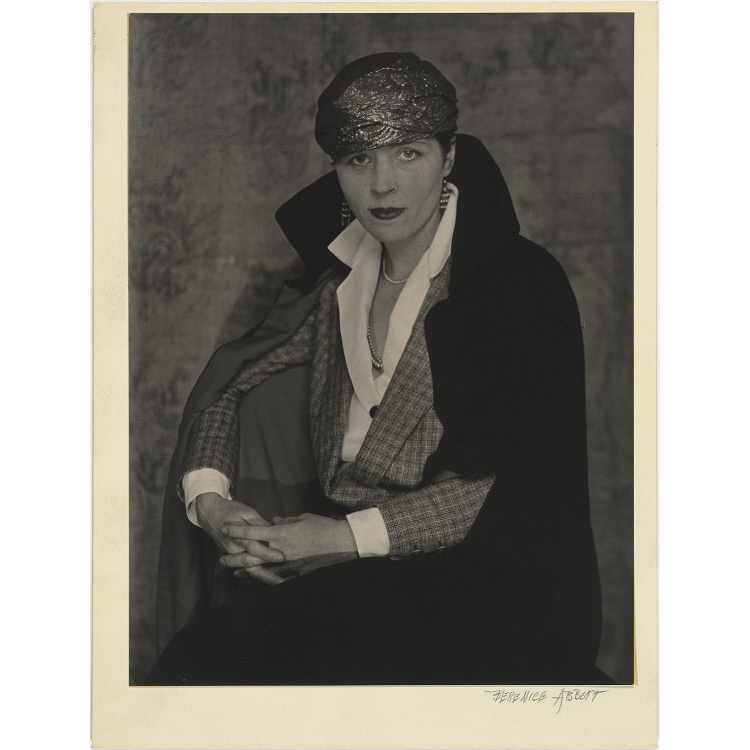
Abbott, Berenice. “Djuna Chappell Barnes”. 1926. National Portrait Gallery

Barnes, Djuna. Nightwood. New Directions, 2014.

120 Battements par Minute (2017) dir. Robin Campillo

120 Battements par Minute (also 120 Beats per Minute, or 120 BPM) directed by Robin Campillo, was released in 2017 at the Cannes film festival, and was generally well received. The film, set in the early 1990s, focuses on the group ACT UP Paris (Aids Coalition to Unleash Power), a political organization working towards ending the AIDS pandemic. The film’s focus is not so much on historical accuracy, but rather emotional accuracy, conveying the pain and urgency felt at the time. Through this lense, I aim to explore the political weaponization of queer grief.

The first half of 120 BPM has a more general lens on the setting it presents to us, Paris in the 1990s at the height of the AIDS crisis. We’re introduced to ACT UP at the same time as Nathan and two others, and view how the organization holds meetings, delegates tasks, holds protests, and informs their members. Sean is introduced with a controversy, when member Sophie (who was leading a protest at a medical conference of a sort) brings to the table the issue of Sean and some other partners taking drastic measures at the conference. What was supposed to be a routine demonstration is upstaged when someone accidentally throws a blood bag too soon and hits a key speaker in the face with it, and Sean and Max take the opportunity to handcuff the speaker to a pole. The group argues about presentation, respectability, and upsetting others. There are a couple more demonstration/protest scenes that highlight some of the impactful, hard work of Act Up, before the movie shifts its focus on the developing romance between Sean and Nathan. With this shift, we get to see a more in-depth, personal, and affective view of how the AIDS crisis plays out. Sean is HIV-positive (Nathan is not) and they have a couple conversations about HIV, sexual histories, etc. Their relationship develops, as does Sean’s illness. Eventually, Sean goes from an active, involved member, to a vacant version of himself as the disease progresses. He eventually asks Nathan to euthanize him, and dies. Act Up throws his ashes on health insurance conference-goers, as Sean asked before his death. The film ends with this scene transitioning into one of the members of ACT UP dancing at a club. 

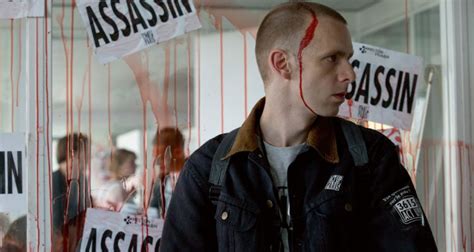
In one of the beginning scenes of the movie, Act Up storms a Melton Pharm office building (a pharmaceutical company that takes the spot as the main antagonist of the film), throwing blood on the walls and windows. As the police storms in and starts arresting them, the members drop to the floor so that they must be dragged away (and are more of a hassle to arrest). Afterwards, on the train ride home, they complain about the officers, saying that they were held for three hours too many and poking fun at how the police officers wore gloves to handle their bodies, as if they were scared of getting any on them. In this course, when reading Anzaldua, we asked about what place and use queerness has on a community, especially marginalized ones. But in 120 BPM, as seen in this scene, the one with Sophie, and other activism scenes, the question gets turned to “what can the community do for us?” Personally, I’m partial to this question. As with the scene with Sophie and our conversations about the Fun Home musical, I think often within the community (and other marginalized communities) there’s a lot of worries about palatability as a means of getting rights and acceptance. The ‘respectability’ issue comes up often and is sometimes even used as a means to gatekeep. This can be seen in things such as the exclusion of aromantic and asexual individuals, as well as with how we deal with gender identity and pronouns. Anything outside the binary (and therefore, the ‘normal’ order of things) is often discredited, based on the fear that identities and pronouns that are not as mainstream or easily understood/identifiable will make the whole community look ‘unreal’ or as ‘ridiculous’ as these identities can be perceived. I think in part, the problem is that with the idea of ‘respectability’ comes the question -posed by the marginalized community- of “will you allow us to exist in the same space as you?”, which of course comes with all the marginalization, violence, and rejection. In setting respectability aside and asking “what are you doing for us?” this violence doesn’t change, but instead the marginalized people assert their space and demand their dues. That is, in part, what the film shows us ACT UP doing. 120 BPM reminds us of the aggressive, demanding, bold way we’ve demanded what’s due to us. I find this increasingly important, especially with the complacency (or worse, assimilation!) brought about by the legalization of same-sex marriage, which only services part of the large LGBTQIA+ community. It’s a good reminder that the right to marriage is not the only thing we’ve ever fought for, it’s not the only thing we’ve ever wanted or needed, and it’s not the end of us.

After the shift into the more personal/intimate view of the narrative (with the two lovers, Nathan and Sean), there is an increased emphasis on death and loss. This is both in the grander scheme, with both the abstract collective of Paris and unnamed members of Act Up emphasizing their imminent deaths in meetings, and with characters that have been developed throughout the narrative. One of these, a young member named Jérémie who has been in several scenes and whose disease has noticeably progressed, dies at about the halfway mark of the film. He asks for his casket to be carried throughout the streets of Paris so that his death can have political meaning, as well. The cycle repeats with Sean- he noticeably gets worse, more tired, less capable, fragile in a way he has not been presented before. He asks Nathan to euthanize him, and asks that his ashes be thrown at health insurance big-wigs. A heavy sense of loss permeates the film as we watch these characters get sick and die, and although the political use of their deaths seems to accentuate this loss and grief, it also serves as a way of self-imposed melancholia. With these political deaths, the goal is to make it harder to forget these individuals and let their deaths pass by meaninglessly. This opens up an avenue of melancholia not previously explored in this class- that of melancholia weaponized for political gain. Melancholia in queer art is not a new or even a revolutionary subject- often, this is even commodified and capitalized. But in the beginning of the semester when we talked about how ‘happy’ is a narrative that is increasingly and incessantly pushed, and that sometimes there are benefits to allowing oneself to become melancholic, I hadn’t quite understood. However, I’ve since begun to take notice in how a lot of the queer activism I’m present to- a lot of activism in general- weaponizes this grief, bringing it to the forefront and refusing to ignore it. While this can and does become overwhelming, it is also a useful political tool, and I personally prefer this use to that of servicing the straight audience with the ‘beauty’ that is a narrative composed of queer suffering, simply to suffer.

There is strength in being happy; there is strength in being miserable. It’s important, human, to let yourself experience whatever emotions you feel in their fullness. One of the main features of melancholia is the inability to get over something, which we categorize as a negative because we as a society are so focused on moving on and experiencing the ever-fabled happiness. In certain cases, this inability to move on is important and useful; the inability to let go of queer grief, to ‘put behind’ the pain and wrong that has been caused to us by straight society, teaches us lessons on queer history, queer activism, and queer identity. AIDS is not a problem of the past, a problem of the negligible- if the only way that we can draw attention to that is through a refusal to relinquish grief- to force others to share in our grief- then so be it. I liked this film, and it’s execution, but I’d also like if it took a step back and listened to it’s own message– if it paid attention to those of us who must still suffer today.