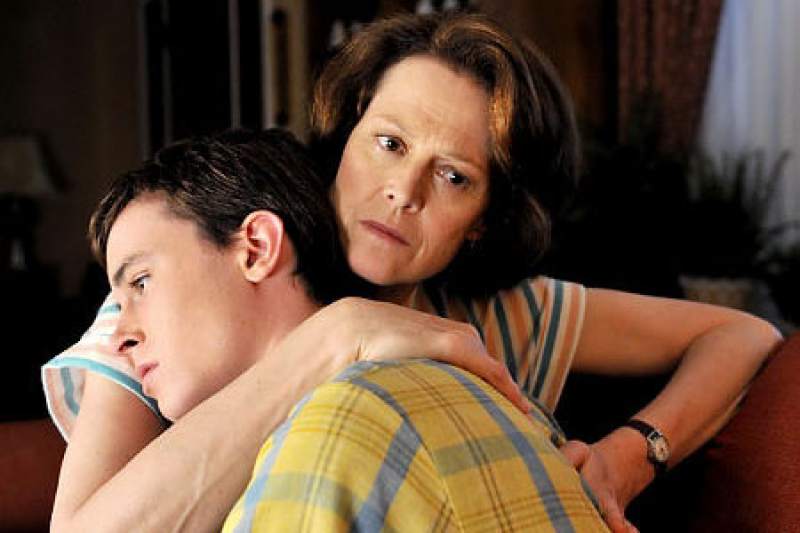
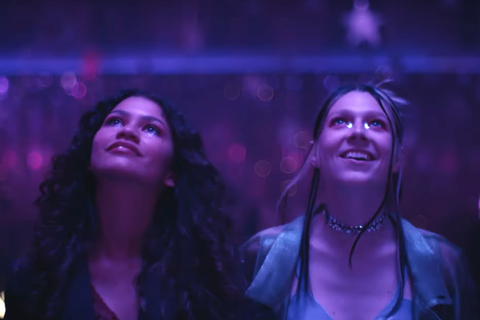
Euphoria – Sam Levinson (2019)

Euphoria is a teen miniseries that confronts topics of internalized homophobia, drugaddiction, mental illness, body positivity, and abortion, among others. The U.S adaptation of the show was created by Sam Levinson and premiered on HBO early Summer of 2019. Since its premiere, the show has become notorious for the colorful aesthetic that dominates the cinematography and the main characters’ unique styles, and the rawness with which it portrays gruesome teenage experiences. With an age rating of 18+, the target audience seems to be mature teenagers and young adults. Queerness and melancholia are deeply woven into the plot and visuals of the show and it (fortunately) feels like we are witnessing melancholic characters who happen to be queer, since their queerness isn’t the source of melancholia as is often the case on television. A stellar cast of Gen Z actors that includes Zendaya, Hunter Schafer, and Alexa Demie, takes us through uncomfortable yet relatable moments of ambivalence as their characters come of age. 

The series follows Rue, the biracial seventeen-year-old protagonist, and other teenagers in a small suburban town as they face difficult coming of age challenges. Shortly after being discharged from a rehabilitation facility, Rue returns home to her mom and sister with no intention of abstaining from drugs. However, she soon she meets Jules, the new girl in town (who happens to be trans), and falls in love, replacing her addiction to drugs with an equally unhealthy addiction to Jules. In the end, it is revealed that Rue’s drug addiction serves as a method of coping with the loss of her father. Paradoxically, it is precisely this detachment from real life that keeps her rooted in this melancholic state and leads to a loss of self. The scenes depicting melancholia are heightened with key stylistic choices: soft blue, pink, and purple lights often engulf the characters and flashbacks to their childhoods evoke a deep gloominess that serves to highlight their internal conflicts. It is simultaneously sad and beautiful. 

Rue narrates all eight episodes of the series, often admitting her own unreliability as she fills us in on a different character’s backstory in each episode. Her ongoing dialogue with the audience and the widescreen structure of the picture cultivates intimacy, drawing the audience in. In the moments that she speaks directly to the audience, it is difficult not to empathize with her. Rue’s character is perhaps the most well-written character in the series. In fact, the show has been deemed most successful in its portrayal of depression and drug addiction, a feat that many attribute to the showrunner’s own past experience with those issues and Zendaya’s groundbreaking performance. The complexity of a well-acted and well-written queer biracial character who struggles with mental illness and drug addiction would be just enough to carry the entire season, if it had to. Luckily, the other character’s storylines are powerful and interesting in their own right.

One of my favorite moments of the series happens in the second to last episode titled, ‘The Trials and Tribulations of Trying to Pee While Depressed.’ Jules leaves town for the weekend to hang out with an old friend and meets Anna, whom she feels immediately attracted to. The setup of this first encounter is splendid: Anna and Jules are in bed, Jules laying down and Anna sitting on her while doing her makeup, the ceiling of the room is covered with soft pink clouds and Jules tells Anna about her gender progression. She describes the trajectory from being raised as a boy to taking hormones as a teenager as “leveling up,” though she admits that she “hasn’t yet reached her full power.” When Anna asks about her relationship with men, Jules says, “in my head it’s like, if I can conquer men, then I can conquer femininity,” which prompts Anna to ask why she needs a man to feel more feminine. Then, when Jules is unable to respond, Anna asks whether she feels like she has already conquered femininity. Jules says, “I don’t know but it’s not like I even want to conquer it. It’s like I want to fucking obliterate it and then move on to the next level. I don’t really know what that means or looks like but I want it.” And we hear her friend in the background chime in with “Queerness is infinite!” I found this scene to be refreshing in its depiction of the trans experience. Here we are told that there is no one universal trans experience and, like the rest of the characters, Jules is still figuring it all out. Hearing a trans character played by a trans actress speak about the complexity of gender and sexuality while flirting with a queer woman of color felt like a monumental moment for representation in television. It is a big departure from how queerness was presented in some of the texts that we encountered in class this semester, such as Giovanni’s Room and Fun Home. 

Growing up, I desperately looked for a show like this one. I grew up in a small conservative Anglo town in Central Florida and, as an immigrant lesbian woman of color, I struggled to find authentic representations of people like me in the media. It seemed like the only accessible lesbian films were tragic stories of forbidden love between white queer women. I truly believed that people like me didn’t exist: I was too foreign and too feminine to be queer. Needless to say, it took me a long time to come out to myself and to others in my community. Euphoria seems to exist in an entirely different world. Its queer characters never come out or struggle to identify themselves with a label; their peers are not fazed by their sexualities; the conflict does not stem from the characters’ difficulty with accepting their sexual or gender identities. It was a difficult trajectory but today I have an amazing partner, tons of queer friends, and a family that loves me. I hope shows like these make it a softer, kinder path for the new generation of queer girls. 

It is very easy for shows like this one to prioritize shock value at the expense of rich storytelling. One look at its most successful predecessors-Skins, Degrassi, etc.-says it all. Though euphoria has an aspirational element, it is mainly stylistic. The combinations of soft pink, blue, and purple lights that engulf the characters at times and their unique, cartoon-like styles definitely create an aspirational mood. However, the characters lived experiences are intentional, with important themes succeeding them. It doesn’t feel like the show is trying to glorify drug consumption or teenage sex. Instead, it shows us difficult experiences that we may or may not relate to and demands that we acknowledge them. At 34 years old, Sam Levinson is a millennial creator. Thus, Euphoria gives us a glimpse at the kinds of narratives that are possible when our generation is in charge of television and film. 
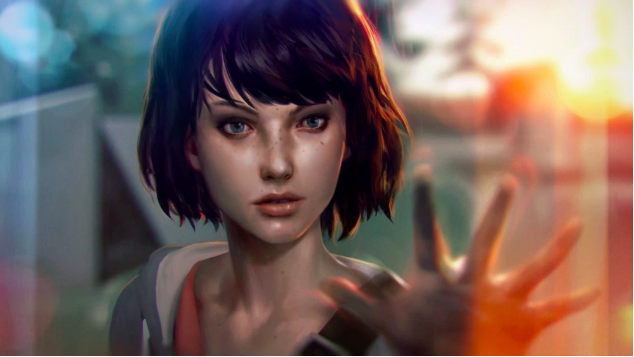
Life is Strange (2015) by DontNod Ent.

       Life is Strange is a 3D, single player, choice-based game video game where you play as an 18 year old girl named Max Caufield who discovers she has time traveling powers and uses them to save her childhood friend/love interest, Chloe Price from dying. The game follows the butterfly effect concept, in which it consists of the player making decisions that will affect the turnout of the story. There are parts of the game where certain decisions are life or death decisions, affecting the characters and tone of the game. The game is played out in an episodic way where you play five episodes (as opposed to ‘levels’). There are many themes displayed throughout the game such as melancholia, queerness, bullying, family and loss. The game was developed by a French studio called DontNod Entertainment and was produced by Square Enix. DontNod Ent. was founded in 2008 and published their first title in 2013 with Remember Me, however, this project brought upon bankruptcy and had to resolve their financial conflict by crowdfunding what would eventually be Life is Strange which created an incline of success for the studio. As someone who plays video games, I tend to hear about different games within the community. I discovered Life is Strange through a Youtube playthrough from a gaming channel I used to watch. I’ve been captivated since the start of the game, however, I had some personal criticism against some of the dialogue as some of it seemed a bit outdated. Nonetheless, I was intrigued by the story and the characters I was presented with. Life is Strange uses fictional properties such as time travel in order to convey to the audience that despite what we want in life and who we want to save, we must move on and accept the consequences that are bound to come our way, and that we must go through the pain of loss and melancholia instead of grasping for something to fill our ego. 

        To give further background info on the game itself, the game is set in a fictional town called Arcadia Bay, Oregon, where our protagonist, Max, is a senior at a prestigious high school, Blackwell Academy. Max is a timid, introverted character with a love for photography. She often takes photos of objects in her environment, which is significant because these photos are used later in the game to time travel to that one place in time. Max discovers she has powers when she accidentally reverses time when an old friend, Chloe, gets shot in the chest by the troublesome and violent, Nathan Prescott in the girls bathroom and sends her back to the first scene in the classroom. Chloe Price is a rebellious and assertive teen and was Max’s childhood best friend. Within the game, there’s additional information revealing that Max actually moved away from her town for 5 years and came back after getting accepted to Blackwell. While Max was away, she started to drift apart from Chloe, which caused some conflict in their relationship when they began spending time with each other again. As they spend more time with one another, Chloe tends to be the one who is caught in fatal situations where she is put in danger and Max has to use her powers to help keep her alive. This raises a significant issue as Max has continuous dreams about a massive tornado headed towards her town and learns that the more she uses her powers, the stronger the threat of the tornado is. This creates the conflict where Max wants to save Chloe’s life, yet, also doesn’t want her family and friends in her town to die from the storm. 

        Chloe suffers significantly from loss and melancholia of her late father and her missing best friend/girlfriend, Rachel Amber and ultimately becomes a symbol of loss. Chloe lost her father in a car accident at a young age and she still suffers from the loss and struggles to get over it. What exacerbates this is the fact that her mother remarries to another man, who Chloe doesn’t get along with at all. Chloe feels hurt that her mother can move find a way to move on from the death in the family, yet, Chloe still suffers and can’t find a way to move on. She finds ways to cope in more destructive ways such as smoking and getting herself into harmful situations, yet she doesn’t benefit from these “mechanisms” as she’s still unhappy with her situation throughout the game through her behavior and her dialogue with Max. 

        Chloe suffers from the loss of two important people in her life which ultimately makes her a symbol of loss and death. She is fated to die which is represented by the amount of times she is able to die throughout the game. In episode one, she gets shot in the chest by Nathan, in episode 2, she accidentally shoots herself while shooting bottles in the junkyard and nearly dies when she gets her foot stuck in train tracks. In episode 4, Max travels back in time through one of her photographs in an attempts to stop Chloe’s father from dying which ends up backfiring when Chloe is terribly injured from a car accident and suffers while her parents drown in debt from medical bills. Chloe asks Max to euthanize her and no matter what you choose, you must give her the overdose. In the final episode, Chloe dies again from a gunshot and for the final decision of the game, you must choose whether to sacrifice Chloe for the sake of Arcadia Bay, or sacrifice the Bay for the sake of Chloe. For every death, Max has to avoid suffering from her loss by bending time continuously, knowing it’ll destroy her environment. She can’t help but think of living a life where she doesn’t have Chloe by her side. 

        Max believes that she uses her powers for the greater good by constantly saving Chloe’s life when really, she’s destroying her environment, and her ability to ‘let go.’ As mentioned before, Max must make the decision of whether to sacrifice Arcadia Bay or Chloe to the looming threat of the storm. Throughout the game they both developed a significant and romantic relationship with one another, it would be painful for Max to have to let go of Chloe, especially after being away for a long period of time. The player also develops a liking to them and feels emotionally impacted by their relationship as they have been through so much together. However, due to these events, it’s clear to us that Chloe is fated to die and if Max tries to cheat death again it will ultimately have treacherous consequences and Chloe may never stop getting herself into these fatal situations. In my playthrough of the game, I chose to sacrifice Chloe because I knew that she was always meant to die since the very beginning and trying to hang on to something that isn’t meant to be is meaningless and harmful in the long run. Max must face her fears and give into the inevitable and bare the loss of someone she loves dearly, no matter how painful it may be. 

        Personally, this game impacted me emotionally as I was so invested in these two characters and their journey through this otherworldly, somewhat spiritual path which would ultimately lead them to certain doom. I have never really experienced loss but I do experience the fear of having to lose someone important to me. I too wish I had some kind of power to change things to the way I want them to be but I know that this isn’t as perfect as it seems. As a queer individual, I felt impacted through Max and Chloe’s connection and how they would both go through lengths to save each other. They’re not perfect characters and have flaws just like regular people, but they are still able to love and cherish one another without a care for what people may think of them. 

        Life is Strange teaches the audience that it’s okay to let go and deal with loss because it is a part of life whether we like it or not. What matters the most is the time shared with people we love and care for before their time is up. This is why this game is so relevant to those suffering from loss and/or melancholia. As for queerness, it shows a meaningful connection between two female characters who aren’t sexualized or bastardized in any way which is refreshing. The medium as a video game makes this piece engaging and compelling and an experience all should take part in.  

Blade Runner 2049 dir by Denis Villeneuve (2017)

Blade Runner 2049 is the sequel to the cult-classic sci-fi Blade Runner. Set in the far flung future of 2049, the story revolves around ‘replicants,’ artificial humans created for various labor purposes. Older model replicants would periodically go rogue, escaping from the purposes they were designed to live among humans. Those who hunt replicants are known as ‘Blade Runners.’ The story follows K, a replicant referred to only by his serial number, who works as a blade runner hunting down these older models. 2049 deals with themes of memory, failure, and alienation. Fundamentally, though, it is about loss. It is a story about losing your past, your future, and even your identity.

The story begins when K discovers the corpse of a replicant who gave birth- something supposedly impossible. Alongside the corpse, he discovers a carved wooden horse with a date carved into the bottom. The horse features in K’s memories, memories that were supposedly manufactured and entirely false. He is charged with hunting down and destroying the replicant child, even as he, discovering more and more evidence of the truth of his memories, begins to suspect that he himself may be the child. 

It comes to a head when K tracks the child’s father: Deckard, the protagonist of the first Blade Runner movie and a former blade runner who had first been involved with the case of the child’s mother. K believes that Deckard knows the location and identity of the child, and goes to Deckard . Before he can confirm one way or another, Deckard is kidnapped, taken by forces who seek to give all replicants the ability to reproduce to create a cheaper workforce. K is knocked unconscious, and dragged to a secret conclave of rebel replicants, devoted to the care and protection of the child. He learns that the memories he’s been chasing are not his- they are implanted, replicas of the true child’s memories seeded throughout different replicants. He is not special. Accepting this, accepting his normality, K goes to save Deckard, taking a killing blow in the process. He brings Deckard to his now grown up child, a maker of memories, and then goes to lie down in the snow outside to die. 

The movie is about loss. This can be seen just from a summary of the story. K starts out lost, a person without a past. He slowly builds an identity around his memories, finding himself as ‘the child’, only to lose that in turn when he realizes his identities are false. Lost and purposeless, K seeks to reclaim his meaning and identity through rescuing Deckard. In the process, he sacrifices his life, losing his very existence. K’s entire story is about him trying and failing to find himself in his past, only finding fulfillment and purpose when he embraces making decisions to make an identity of his present self. 

Deckard and the child also both suffer from loss. Deckard is wracked with guilt and melancholia over abandoning the child, and, though he knows it was the best way to make certain the child was never found by forces who wished her ill, he still mourns his loss of her. He also mourns the death of his lover and the child’s mother- Rachelle. This loss is compounded when, in exchange for information regarding the child, Deckard is presented with a clone of Rachelle, perfect in every way. Refusing the offer, he is forced to watch the clone’s murder, reliving the loss of his love one more time. The child herself, Ana, also suffers from a loss. Her loss is more abstract than the concrete losses that Deckard and K suffers, but no less poignant for it. Ana’s cover story, designed to keep her identity safe, claims that her immune system is compromised, requiring her to live her life in a glass tube isolated from society. Her primary entertainment is the use of holographic machines to construct memories, memories of places she can not visit and friends she can not have. She mentions that she rarely gets visitors, and is seen constructing a false memory of a child’s birthday party that she pretends to interact with, her ‘real’ self fading through the holographic bodies and balloons of the party- a neat visual metaphor of her inability to interact with those outside. The trio of K, Deckard, and Ana form a triangle of losses: K’s loss of his personal identity, Deckard’s loss of his familial identity, and Ana’s loss of her societal identity.

The theme of loss is reinforced by the worlds ambient storytelling, by little moments technically irrelevant to the larger plot. For example, the very world the story is set on has suffered a cataclysmic climate disaster. This is a world where genuine wood is a fortune-making luxury, where most animals are extinct, where slugs are farmed for food because no real crops can grow anymore. This physical loss is compounded by an informational loss: After ‘the blackout’ in 2022 (an event actually covered in a short animated movie set in the world of Blade Runner), almost all non-paper records and information was destroyed. Many of the people of this world, then, live without records of what life was like before, without connections to their past. One mildly mutated archivist remarks that his mother was devastated to lose his baby photos- a moment played for comedy, but one that belies a world of gaps, one where your past is ephemeral and easily lost.

Emotionally, the movie is an attritional slog of pain and melancholia. Even aside from its depressing story, the film creates an atmosphere of sadness and loss. From bleak color contrasts to harsh lighting, the visual language of the movie is one of overwhelming pressure. Though it is incredibly beautiful, it often uses its colors and backgrounds to create a sense of dread, monotony, or pressure. A building the size of three city blocks, dwarfing the viewer with its scale, rows upon rows of maggot-farms stretching to the horizon, an empty radiation blasted ruin of a once-great metropolis- all create a sense of a system too big, of something cold and empty and devastated. The music conveys this sense of emptiness- primarily through not being present at all. Most of the movie has only diegetic sounds, the sounds of machinery or rain or crowds. What music there is is harsh, droning, mechanical, used to underscore moments of mental tension. 

Upon first seeing this movie in theaters, I genuinely cried at the end. Not because of the sadness of K’s death – though it was deeply moving – but with relief. The movie had built a world of loss, one where meaning can be erased or bestowed without warning. It had shown us, in no uncertain terms, that everything, from one’s past to their present to their future, can be taken away or lost. It created an atmosphere of pressure, stress, and anxiety. And then, in the end, it gave us a moment of breath. It gives the watcher hope. Even as K bleeds out, it begins to snow, and the movie begins to play uplifting music for the first time. Even as K bleeds out, Deckard meets his child for the first time face to face. Even as K bleeds out, he looks, for perhaps the first time in the movie, content. He has lost his life, but, for the first time in the movie, he has gained something in exchange for the loss: Purpose. This was what caused my relief, my tears. The pressure, so expertly crafted and maintained so it just skirts the edge of unbearable, is for the first time entirely lifted. For the first time, we are offered unconditional hope.

Blade Runner 2049 is about what we lose, yes, but it’s also about what we choose to give away. K gives his life for two people he barely knows, and, through that, finds himself. Though the movie may be grim, dark, and scary, it goes to those dark places not to revel in suffering, but to teach us about how loss can change us, and how we can recover from it.

“Pariah”(2011) Directed by Dee Rees

Queer cinema is rapidly expanding, with more diverse and inclusive narratives being told. While we have seen an increase in diversity and representation, the majority of films about queer identity and queer coming of age, are centered around white, cis gender men or women, that embody a very conventional and socially acceptable queerness. Lesbian narratives that are more well known and integrated in mainstream media have been predominately portrayed by white cis gender women, who still maintain a traditional beauty and ideal femininity. Pariah was the first queer film I saw where not only was the protagonist a person of color, but they strayed from the mainstream, palatable queer expression. It is because of films like Pariah, that exposed the world to these kind of narratives, that filmmakers are able to depict queer people of color in their films and expand on the very limited type of queerness that was deemed acceptable. The themes of this course, such as loss and feeling alone are evident in this film.

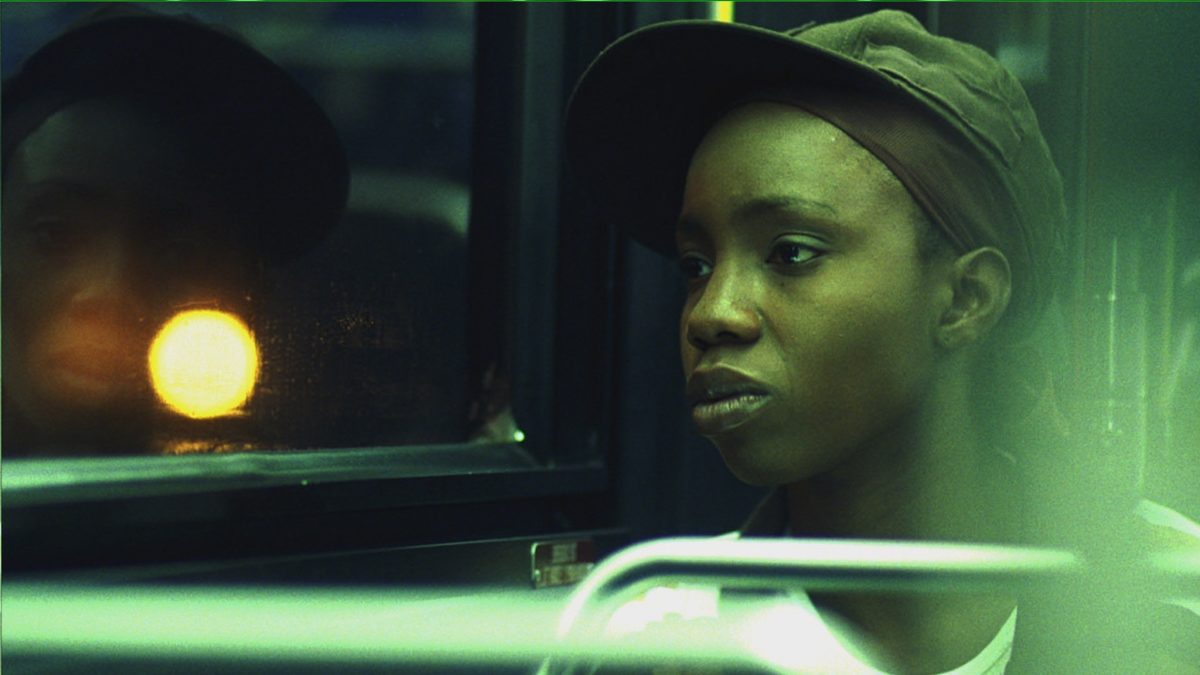
The film Pariah, directed by Dee Rees, is first and foremost a coming of age film, which is about a 17 year old black girl. Pariah explores the life of a closeted lesbian named Alike, growing up in Brooklyn and her journey as a queer person in a religious, homophobic environment. Alike, also referred to as Lee, is the protagonist of the film and the character we follow on her journey of self discovery. Alike goes through the universal challenges of trying to figure out where she belongs, and through the relationships she has with her friends and parents, she is able to accept herself and embrace her identity. The film was released in 2011, and received much praise from the queer community, primarily for its diversity and being one of the few movies at the time that portrayed queer people of color. 

When we first meet Alike, it is at a strip club with her best friend Laura. Alike is visibly uncomfortable, and is unable to interact with any of the women there. Laura is a stud, meaning she is a lesbian that identifies with her more masculine traits. At the beginning of the film we see Alike, mimicking this style, and following in Laura’s footsteps. Laura is Alike’s only insight into the lesbian community, so she is only exposed to a very specific facet of lesbian culture.

 However on the other extreme, Alike’s mother wants her to dress more feminine and get rid of her “tomboy” look. Alike is torn by this because she doesn’t resonate with either of these identities, but lacks the knowledge or confidence to cultivate her own identity. It is not until Alike meets Bina, the daughter of her mother’s friend, that she discovers a middle ground. After spending time with Bina, and getting introduced to new art and music, Alike begins dressing exactly like her. She quickly becomes a love interest in the film, and through their short, yet impactful relationship, Alike come out of it with the necessary tools to stand up to her parents and form her own identity. 

Alike’s transformation is most noticeable in the way she dresses. One of the first scenes in the film, depict Alike on the bus ride home, changing out of her baggy, stereotypically butch appearing clothing, into a more fitted t-shirt with rhinestone letters spelling “Angel”. Her mother praises her when she gets home saying the shirt compliments her figure, which makes Alike uncomfortable. This reinforcement of traditional femininity through gender specific clothing adds to Alike’s confusion and lonesomeness. Since Alike is extremely unsure of herself and lacks confidence, she imitates an identity she thinks she should have, and morphs herself in order to please others, and this occurs with Bina as well. While they bond over a shared interest in music and writing, over time we see Alike begin to copy Bina’s style, dressing in similarly bright colors and scarfs. Alike does this to fit in and impress Bina, once again losing herself in an identity she thinks she should have. Alike quickly develops a crush on Bina and the outcome of their relationship was instrumental in her coming out. Alike and Bina attend a party together, and when the return back to Bina’s home, they have sex. However, similarity to many other queer narratives, after they have sex, Bina feels uncomfortable and tells Alike to forget it. She stresses that she is not gay and what happened the previous night was a mistake. Alike is heartbroken by this and shortly after comes out to her parents.

After Alike came out to her parents, and was badly beaten by her mother, she left home and stayed with her friend Laura. Eventually Alike’s father came to see her in an effort to bring her home. Instead Alike reveals that she has been accepted into an early college program and that she would be graduating early. She says to her father “ I’m not running, I’m choosing”. I found this quote to be extremely powerful and almost indicative of the experience of a queer person in a non-accepting environment. Not only does she mean this in a literal way, but she is no longer running from herself and her sexuality. She is finally ready to be herself and no longer live in fear of rejection. 

Alike experiences the loss of her mother, after she comes out. Not in a physical sense but her mother’s reaction to her lesbianism resulted in physical assault. Throughout the movie we see the decline and failure of the marriage between Alike’s parents. Her mother is viewed as the villain and is the one we continually see enforce gender roles and heteronormative standards. She is seen forcing Alike to change into a skirt for church and discourages her from spending time with her best friend, Laura, who is openly gay. Despite the trauma and pain her mother induced, Alike still loves her. Before leaving for college, Alike confronts her mother for the first time since her coming out. She tells her mother she loves her, and her mother does not reciprocate the earnest plea, but instead says, “I’ll be praying for you”. It is a devastating moment in the film because we are unsure if this relationship will ever be repaired, and the love her mother once had for Alike is now gone.  

One of the many reasons why I chose this film as my artifact, and why I believe it is so important for queer cinema is because the film has an all black cast and the way race is utilized is very interesting and unique. Due to all the characters being black, there is almost a lack of racial hierarchy, and we are able to empathize with Alike. The purpose of this film was to showcase a queer narrative within a group that is often times excluded from representation. Pariah expertly depicts a young girl that the audience, regardless of gender or race can relate to. Additionally, I can not speak for the experience of people of color who have watched this film, but I would assume being able to see a queerness within a black community, in a way that is separated from whiteness, can be very impactful and empowering. 

Pariah is a film that skillfully explores the often times tumultuous coming out process while providing a media for people going through the same struggles and additionally set a precedent for the kind of representation we should expect in queer cinema. Pariah is so important and relatable because of the nuances in the dialogue and utilization of actors that do not necessarily encapsulate the mainstream depiction of queer figures. This sort of representation is unfortunately extremely rare, yet a vital component to the ever-growing genre. Queerness does not only manifest in white bodies, therefore, the films and other media used to express this identity should be representative of that. 

Work cited 

Dee Rees, Pariah the Movie, Kickstarter, 22 Dec. 2010, https://www.kickstarter.com/projects/619452369/pariah-the-movie

Pariah. Directed by Dee Rees, performance by Adepero Oduye, Focus Feature, 28 Dec. 2011, Starz, https://www.starz.com/us/en/movies/41561

Alex Strangelove (2018)

The artifact I’m choosing to write about for the final project is the movie “Alex Strangelove”, released on April 14, 2018, and produced by Ben Stiller, Jared Goldman, and Nicholas Weinstock. This movie is about a teenage boy in high school dating his best friend. His main goal throughout most of the movie is to have sex with his girlfriend for the first time. Alex thinks he loves his girlfriend until he meets a boy he may like at a party. We see him start to question his sexuality and face some hardships while trying to figure it out. The movie displays themes of suppression/question of sexuality and suppression of one’s self which we can see as a recurring theme in many of the books we have read in class during the course. 

In the movie, we first see Alex question his sexuality when he attends a party with his girlfriend and meets a boy he thinks he might be interested in. While attending the party with his girlfriend, Alex wanders off looking for the bathroom and stumbles upon a girl and boy sitting in a room smoking. He joins them and gets high with them. After getting high, Elliot, the guy Alex meets, lays down across from Alex and asks him about his craziest hopes and dreams. Alex replies with a heteronormative goal that we also see occur in the book Giovanni’s Room. Alex says he hopes to become a marine biologist, get married and have kids which David also says getting married and having kids is his goal for the future. A bit later at the party, Alex and Elliot lay down next to each other and Alex exclaims “National Geographic photographer.” Elliot questions why Alex says that, and he tells Elliot that this is his craziest hopes and dreams. This is the first sign of Alex hiding his true self from others because he says telling people he wants to be a marine biologist sound more “lucrative”. It also allows Alex to hide his true dreams and goals to fit a more heteronormative view of life. Although Alex and Elliot just met, he finds comfort in Elliot and trusts him enough to tell him something personal about himself.  

The next scene we see Alex question and suppress his sexuality is when he comes out to his friend as bisexual. After hanging out with Elliot for a day, Alex starts to question whether he’s completely straight. He starts to think he’s bisexual and “comes out” to one of his friends. His friend denies Alex’s sudden sexuality change and says he’s just worried about having sex with his girlfriend for the first time and is using sexuality as an excuse to cancel his plans with his girlfriend. His friend even goes as far as pulling down his pants in front of Alex to prove he isn’t bisexual. He even tells Alex that he has a “man-crush on a gay guy” and Alex starts to believe this and again suppresses any idea of him being into guys. This denial from a friend affects Alex because he trusts his friend and wants him to help and support his question of sexuality. When his friend makes Alex’s choice for him, Alex doesn’t question it at all and believes everything his friend told him. We don’t even see Alex consider his question of sexuality after talking to his friend, he goes straight to denial and believes he’s straight. Compared to some of the books we’ve read in class, the main characters were not “coming out” to others for support on their sexuality. Alex also takes a chance of questioning his sexuality compared to some of the main characters we’ve read about. What they do have in common is suppressing their own sexuality because Alex could’ve chosen to listen to himself and not his friend, but not receiving support causes him to repress exploring his options. 

While hanging out with Elliot for a second time, Alex makes a decision he instantly regrets, and it causes him to repress himself again. Elliot finds Alex in a store and asks him to go somewhere with him. When he does, they go to Elliot’s house and hang out for a while until Elliot asks Alex to sit next to him on his bed. This leads Alex to kiss Elliot and as soon as he realized what he was doing he thought about his girlfriend. Then he blames Elliot for leading him on by asking him to go on a drive and dancing for him in his room. Alex even says to Elliot “I gave you what you wanted.” Therefore, excusing his behavior by shifting the blame on someone else and repressing himself once again. He doesn’t want to believe he likes Elliot as anything more than a friend and also doesn’t want to think of himself as being gay. This repression is a constant theme throughout the movie and the books we’ve read in class.  

When Alex finally realizes who he wants to be with, he comes out to his girlfriend and no longer needs to suppress his feelings towards Elliot. After attending a party to get over failing to have sex with his girlfriend, Alex gets drunk and tries to have sex with another girl at the party. When he realizes he can’t do it, he leaves and stumbles into a pool. When he falls, he has a flashback of himself as a kid. In his flashback, he sees himself in a public shower with other boys his age. When the other boys realize Alex was watching them, they called him offensive words, blocked him from leaving the bathroom and pulled down his pants. This suppressed memory is when Alex realizes that he’s gay and has been since he was young. This memory is also the reason why Alex formed the habit of constantly repressing himself throughout the movie which we can see in multiple scenes. Compared to the main characters in the books we’ve read in class, Alex eventually came out to his friends and family. The characters we’ve read about never got this chance. They continued to withhold themselves and never got a chance to express themselves as their true selves. They expressed themselves privately and at times Alex did this too when he spent time with Elliot. Although, most of the characters from the books and Alex did face hardships about their sexuality and expressing themselves. Devon from “My Brother” displayed himself as heterosexual by continuously dating women and having sex after he contracted AID’s to upkeep his heterosexual act. Alex kept up a heterosexual act by dating his best friend and having heteronormative American goals. All the characters relate in some way due to the reoccurring theme of suppression of oneself. 

The first time I saw this movie was with my best friend in June when it came out on Netflix. We used to watch cheesy romantic movies together and laugh about them every time we hung out. When we saw the trailer for Alex Strangelove, we thought it would be like those but with an LGBTQ representation. What I didn’t know while watching the movie was that my friend had already seen the movie before and what she was going to tell me afterwards. When the movie was over, she came out to me and told me she had been struggling with her sexuality for a while. She never told anyone because she felt ashamed due to the struggle of acceptance in Caribbean families. She also told me I was the first person to know and it made me so happy to know she was no longer struggling with how she felt about her sexuality.  

The reason why I chose this movie is because it displayed the theme of repression which related to the themes of the books read in class. The question of sexuality was recurring throughout the movie and all the books we’ve read. I think this movie was a good way of representing the LGBTQ community to families and teens who are also struggling with their sexuality.   

But I’m a Cheerleader (2000) directed by Jamie Babbit

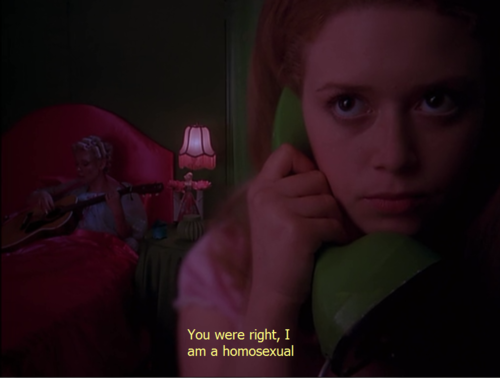
But I’m a Cheerleader is a 2000 satirical comedy directed by Jamie Babbit. This film follows the story of the typical suburban it-girl, Megan who has it all. She’s a blonde cheerleader with a smoking hot boyfriend and comes from a two-parent household. She’s got good grades and is religious. On paper, she is perfect. However, her life is turned upside down when her friends, parents, and boyfriend hold an intervention and send her off to a conversion therapy rehabilitation center called True Directions – she’s a lesbian, and although she doesn’t know it, everyone else does. They know she’s a lesbian because she doesn’t follow societal norms. There is a photo of a girl in a swimsuit in Megan’s locker – this becomes “evidence” of her lesbianism, in addition to her newfound vegetarianism and the fact that she looks bored as she kisses her boyfriend. Ironically, Megan finds her sexuality and herself in the very place trying to repress it.  But I’m a Cheerleader satirizes that societal norms don’t define a person. The stereotypical gender roles True Directions teaches are simply social constructs. People cannot change the way that they are born, and no number of steps can turn someone into a heterosexual, although True Directions proposes five steps to heterosexuality. 

The film begins with a cheerleading montage and we meet our main character, Megan, played by Natasha Lyonne. The audience is the first who knows that Megan is a lesbian as her queerness is evident when her boyfriend, Jared, begins kissing her and she looks painfully disinterested, and instead thinks about her fellow cheerleaders breasts during this stereotypical car make-out scene. The next day, the same happens except her boyfriend is very clearly stalling Megan by driving at a ridiculously low speed for the intervention to be prepared. Once Megan and Jared get to her home, she walks into a room full of her friends, family, and Mike from True Directions; Mike is an ex-gay True Directions employee played by RuPaul. This character choice fuels the repression that comes with conversion therapy. No one can truly be converted, but they can subdue their sexuality, their identity. The True Directions slogan is “Straight is Great.” However, when Megan gets here, she isn’t sure what is happening and why everyone is in her home. One by one, people from her life give examples of why she is a lesbian and she is taken to True Directions to be converted into a heterosexual woman. It is important to note the use of color in this scene – Megan is the only one in bright colors while everyone else is wearing a variation of brown or maroon. This makes her stand out from the rest and makes it clear to the audience that she is “different.” The only other person who isn’t wearing muted colors is Mike, who is wearing the same gear the audience will see him in for the rest of the film – blue short-shorts and his “Straight is Great” slogan tee. This pairs Megan and Mike together as outcasts.

Once Megan arrives, she’s stripped of her clothes and isn’t allowed to change from the hospital gown that Mary Brown, the owner of True Directions, gives her until she achieves the first step of becoming a heterosexual. The first step is admitting that you are homosexual. Megan is unable to do so and even uses bartering skills by saying, “I’m not perverted! I get good grades. I go to church. I’m a cheerleader!” This bartering technique further fuels the enforcement of gender roles imposed on us by society and religion. When her fellow rehabbers talk about the way she objectifies women’s bodies and doesn’t actually like kissing her boyfriend, nor does she get turned on by him, it is then that Megan first admits her homosexuality. She is a lesbian and she cries as she admits it. She is then given her pink shirt and skirt just like the other girls in the conversion center, and the boys wear blue outfits comprising of a shirt, shorts, and a tie. This plays into the further use of color that promotes stereotypical gender roles. Everything that the boys touch is blue and everything the girls touch is pink. The color scheme used throughout the film is very heteronormative and is constantly promoting the binary heterosexual agenda.

 The following step to achieving your heterosexual dreams is rediscovering your gender identity. During this portion of their conversion experience, the rehabbers must learn how to follow their stereotypical gender roles. Megan and the rest of the girls are learning womanly things such as how to vacuum a carpet, how to sew and look good in a wedding dress, how to look like a straight woman, while the boys are learning how to fix a car, how to shoot a gun, and how to chop wood. The girls also learn how to change a baby’s diaper, since lesbians can’t possibly have children. Instead of focusing on these gender stereotypical acts, instead they focus on the blatant erotic nature of all these acts. Every time the boys are doing something, there is a phallic sculpture in the back of the screen – a wrench and a tree resemble the very thing they’re being trained to be against. Another sculpture shows a soldier on his knees in front of another soldier holding a gun near his crotch. The boys find themselves staring at Mike’s crotch and touching each other homoerotically, while the girls fantasize about Mary and graze each other’s breasts. During the second step, the rehabbers discus the roots of their homosexuality. Graham, who appears to be becoming Megan’s love interest, shares that the reason she is a lesbian is because her mother wore pants to her wedding and Hilary can blame an all-girls boarding school. Clayton is gay because his mother let him play in her pumps, Dolph touched one too many boys during wrestling and Joel was traumatized by a pair of breasts. Instead of the “born this way” mentality, this conversion therapy rehabilitation chooses to focus on the external factors that could’ve caused each rehabber to “become” a homosexual. This also fuels the ideology that there are gender-specific clothing items that if worn by the “wrong” gender would cause them feelings of misfit and homosexuality. Such an ideology is harmful for queer youth because it paints them to be immoral and This comes back during step four, during which the rehabbers must write an essay entitled “My Root and How It Prevented Me from Heterosexual Loving.”

The third step is family therapy. During family therapy, Megan finally discovers the root of her homosexuality. She is a homosexual due to the 9-month period where her father was out of a job and her mother had to provide for the family. Seeing her father emasculated this way, she lost her respect for men and gained a homoerotic respect for women. The fourth step is called “demystifying the opposite sex.” In order to “demystify” the opposite sex, Mary shows a plethora of images of 50’s housewives and explains that women are meant to be their husband’s better half entirely. Women cook, clean, and men touch women to make them feel good. While this lecture is happening, we see Megan and Graham start falling in love. Cue another montage of Megan and Graham interacting as partners would. When the rehabbers demystify the opposite sex, they instead demystify their own sex and learn how to do things properly. The women cook, clean, change diapers. This is a further fueling of rediscovering your gender identity, but with a kick – this time we realize that the things we do as women are done for men, and the things men do are done only for women. During this step, Jan discusses how she’s actually already heterosexual. There was a huge assumption that based on Jan’s shaved mohawk and her outward appearance, she was gay. However, this was not the case whatsoever. This is a prime example of how homosexuality, specifically lesbianism, is typecast into being softball players, or having to look a certain way. However, we are allowed to represent ourselves any way that we want to, we are allowed to show the world whatever image of ourselves we personally like and want to display. They face a final test during this stage, where they show off the skills they learned over the course of their rehabilitation. The girls set tables and clean, the boys play sports and fix cars. Long story short, girls do the girly things and boys do things that guys do. Megan finds herself being forced to leave during this step because Mary finds out about the secret relationship between her and Graham.

The fifth and final step is simulated sexual lifestyle in which the rehabbers must simulate a sexual desire for the opposite sex in order to graduate. Mary teaches them how to engage in heterosexual sex. Everyone looks quite bored, laying there expressionless, trying to convince themselves and Mary that they are no longer themselves. They are no longer their sexuality. This stripping of someone’s core identity can be detrimental to the queer youth perceived in this film, and essentially gives us an antithetical response to True Directions’ slogan – gay IS okay.

But I’m a Cheerleader ends with a graduation where the use of color is used again, this time to both provide a heterosexual agenda and a religious connotation. The rehabbers stay in their normal colors of pink and blue, while everyone else is in white. This seems like a scene of the rehabbers walking through the doors of heaven rather than in a graduation. Though Megan was kicked out of the program, she finds herself at graduation and the film comes full circle as she cheers Graham on into leaving behind this conversion center behind and running away with her. Queerness prevails.

This film is related to Queer Melancholia because of the loss of self that Megan must face when the label of her sexuality has been placed on her. For most people, coming to terms with their queer identity takes time and is an entirely internal struggle. However, in Megan’s case, she is not allowed that struggle because she is told what she is – she had never up until that point even realized that not all girls are like that. Megan adamantly refuses to disclose her status as she’s never thought of her homosexuality since, as a Christian, she doesn’t get hot and bothered by her boyfriend since she’s saving herself for marriage. Through the others in the rehabilitation center, she is able to see that not everyone has the same thoughts about women as she does. She is only able to admit her homosexuality after the others in group therapy sort of bully her into realizing that she’s a lesbian.

Personally, I discovered this film during a time in my life where I was struggling with my own sexual identity. This film was exactly what thirteen/fourteen-year-old Michelle needed to see in order to break the stereotypical gender roles and be able to assess my queerness. Because of the satirical nature of this comedy, it was easier to digest the message that people are going to try to stop you from being yourself. Certain people only care about morals. However, when you know who you are, nothing can stop anyone from determining your worth. Because Megan didn’t know who she was in the beginning, it was easier for people to get in her head and teach her what is right and wrong.

All in all, But I’m a Cheerleader played an important role in the representation of queerness in the media and definitely earned its cult status. The messages of queer identity and the struggles of coming to terms with your identity are prevalent in this film, just as in this course. Through Megan’s eyes, we see a loss of self but also an emergence of self as she discovers exactly who she is in a place that is attempting to suppress it.

Works Cited

But I’m a Cheerleader. Directed by Jamie Babbit. Lions Gate Films. 7 July. 2000.

“But I’m A Cheerleader in 2019: But Im a Cheerleader, Movie Quotes, Cheerleading Quotes.” Pinterest, 6 Dec. 2019, https://www.pinterest.com/pin/440719513515647184/.

Odd Girls and Twilight Lovers: A History of Lesbian Life in 20th Century America

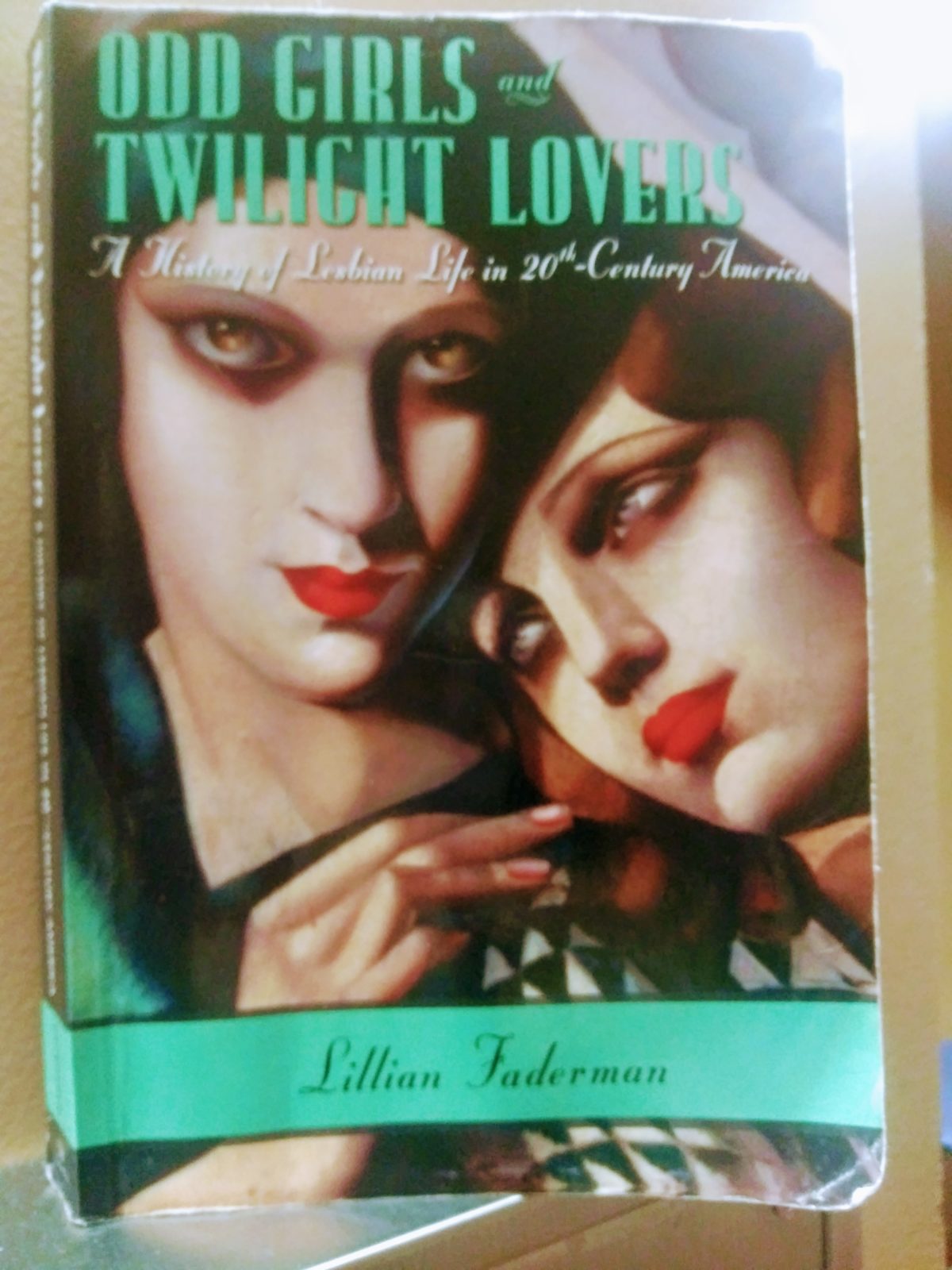
With a deceiving vampire-esque cover, no doubt to give a sensationalist depredatory vibe, Odd Girls and Twilight Lovers A History of Lesbian Life in 20th Century America by Lillian Faderman published in 1991 is actually an academic text whose purpose is to uncover the narrative of lesbian existence during the 20th Century in the US. Despite its promising title, my gut reaction to the cover was that of discomfort at the idea conveyed through lighting that there was some sort of perversion in one woman and girl-like innocence in the other. But it had glowing recommendations so I gave it a chance.  See, every so often I roam youtube to find new vlog videos about butch women, where they discuss their identity. I found one that gave an in-depth description of the history of gender in relationship to lesbianism, with Odd Girls as the source. It immediately earned a place in my “I got to read this!” list. Turned out not to be a disappointment, because the malleability exposed of the conceptualization of love between women is a testament of the potential for change in the treatment and perception of queers in other cultures.

The title, Odd Girls and Twilight Lovers refers to two pulp fiction novels published in the 20th century with lesbian protagonists. Pulp fiction is a genre of literature whose subject matter is “sensationalist” material. Lesbians are supposed to be “scandalous” and the goal is for the reader to voyeur into these “odd” creatures’ lives. The reason, I garner, to use this title is two-hold. One to provoke interest but also to give a historical blurb of circulating ideas about lesbians present during that time.

Also, the cover is not original, it is taken for a lesbian novel called The Well of Loneliness. This might be because it is exemplary of how women interested in women were perceived and treated during that time. What we in these times would be called lesbianism were termed inverts, which meant people who desire members of the same sex.

She starts out discussing the relative acceptance of so-called romantic friendships between women. Followed by the stigmatization of these pals by the creation of the ”diagnosis” of inverts by the nascent field of sexology. And how these relationships were forced to go underground during the late century existing within lesbian subcultures. An interesting force that drove a reassessment of lesbian identity was the second-wave feminist movement. The relationship between this text and the course is that the book traces the development of this particular embodiment of queer identity, how the conceptualization of relationships between women has evolved. It also reveals the social context that probably created melancholic lives.

The supposedly scientific diagnosis of inverts probably made some of these subjects of sexology view themselves as perverse or somehow “broken”; that their feelings were pathological. Fadermann explains that because now this type of sexuality was seen as biological there is was not a moral fault and so homosexuals could “speak out against legal and social persecution.” 

So the term inverts aroused from observations made on working-class women. Faderman points out that “most of them suffered in silence…” but that some of which reasoned that moving and living as men would provide them the means and proximity to large cities with a gay culture where they could pursue their romantic interests. Here is a testament to women to define their own path towards happiness. Middle-class women had more options due to education. Some use the medical term to justify not establishing relationships with men despite the promise of heterosexual marriage as gender normative bliss. 

Odd Girls and Twilight Lovers is not only about the history of stigmatization, but also how women have dared to reject the mainstream formulation of The Pursuit of Happiness and instead choose to define it in there own terms. While there were economic imperatives that allow some to venture out to college campuses, workplace and beyond the fact does not belittle their gutsy. All praise to the spread of education, for it provided means and intellectual justification to live queer lives. And I believe that still holds true to this day, especially if you find yourself in a conservative culture. When the option of being financially independent is available it provides the opportunity for self-determination of gender presentation and romantic pursuits. Because of education, some queer women were able to dodge life sentences of domestic servitude.

So my last point is on the impact of the book.  The fact that how the relationships between women have been viewed has changed so much, if you find yourself in a conservative culture you can imagine that there is that potential.  When I read this I was living in Dominican rep. it made me think about how/whether cultures can be transformed.

The understanding of lesbian existence provide by Faderman is that it is not enough to be gay and brave, people have to meet certain economic and/or educational thresholds to live queer lives.

That is why the existing of working-class lesbian subcultures inspires me, though it is also important to note that working-class lesbians in Chicago or New York and other highly urbanized cities probably do possess a better socio-economic position than gay women elsewhere.

By now you must be wondering if I consider myself a butch woman and the answer is I haven’t reached a conclusion. As far as I’ve read these gendered terms are also racialized with butch exists/ed within white lesbian cultures, black lesbians refer to themselves as studs and in some Hispanic cultures, -like Mexico- marimacho, though it’s one of those reclaim-redefine words. But anything is better than Odd Girl, right?

Works Cited
Faderman, Lillian. Odd Girls and Twilight Lovers: A History of Lesbian Life in 20th Century America. Columbia University Press. 1991.

Call Me By Your Name (2007)


Is It Better to Speak or Die?

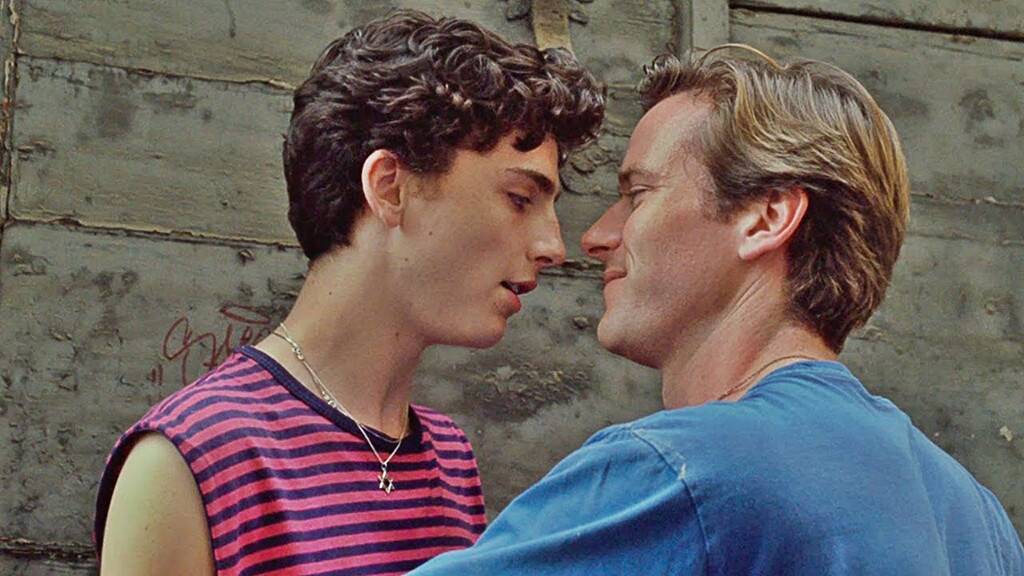
            Call Me by Your Name by Andre Aciman is a beautiful love story that explains the relationship between a precocious teenage boy named Elio and an introvert named Oliver. In Italy, at Elio’s parents cliffside mansion, Oliver is being boarded for the summer as a doctoral student under Elio’s father who is an academic professor. While Oliver consistently works on the revisions of his book’s manuscript, he notices Elio. A beautiful, smart and talented teenage boy. As the book divulges into the romance and the passionate connection, they both share with one another, Aciman finds it prudent to point out major significant moments inside the novel. Within the book, Oliver tries his hardest to distance himself from Elio, scared of doing something he might one day become ashamed of.  Throughout the book, we find so many moments where both Oliver and Elio fear the persecutions of being in a homosexual relationship. This is showing us how society causes us to conform to a more heterosexual relationship in belief of the “Pursuit of Happiness”.

            At first, Elio thought that the feelings he harbored for Oliver were just a cliché. He thought it was just a meaningless attraction for the guest staying in their Italian home for the summer. This was until he found himself becoming sexually aroused at the intoxicating smell of Oliver. After staying up waiting for Oliver after his “midnight sex” with different women and unreturned glances from across the room, Elio tries his hardest to dissuade himself from liking Oliver. He begins critiquing little things such as the ways in which Oliver is incapable of opening an egg or incapable of using words besides “later” when leaving a room. Towards the middle of the book, Elio sleeps with the girl who’s liked him all summer; hoping to diminish the feelings he had for Oliver. One day however, Elio found the guts to write a letter to Oliver and slipped it under his door. He wrote the note admitting that he has feelings for Oliver and leaves an open-ended question asking if he shares the same. Oliver and Elio arrange to meet at midnight, and they find themselves craving the thing they both wanted the most: each other’s love. After sleeping together, Elio’s baffled and confused about his actions from that night. As a teenage boy, he became so confused as to why he said yes to Oliver, but also why he never said no. Oliver hated himself for putting Elio in that position because he knew he never wanted to be in it, in the first place.

Elio’s actions throughout the book caused him to have an ambivalent relationship between himself and his homosexuality. He says “He’ll be with a girl, I’ll be with a girl, and we’re even going to be happy. Every Day, If I don’t mess things up, we can ride into town and be back, and even if this is all he is willing to give, I’ll take it” (Aciman 104). This showed how much Elio pondered the idea of the “American Dream”. He knew that society would never accept him if he’s in a homosexual relationship, but might endure a closeted homosexual relationship between him and Oliver. In his late teens, Elio was  so conflicted and confused on the type of person that he saw himself becoming. After having sex with Marzia, a teenage girl in their town, he realized that throughout his entire summer he had been arguing with his body. He tried his hardest to dissuade himself from what he really wanted but could not have: Oliver.

Later, Elio is in the presence of two gay scholarly men in a relationship joining Elio and his parents for dinner. Elio became disgusted, judging them and the femininity that surrounds them. He says “They had both stepped out from either side of the cab at the same time and each carried a bunch of white flowers in his hand…. like a flowery, guised-up version of Tintin’s Thompson and Thompson twins” (Aciman 125). Elio insulted their relationship by comparing them to the twins in Tintin, who were incompetent and only there for comedic relief. I found this moment particularly important due to the fact that Oliver skipped dinner this night and Elio was left with the gay couple on his own. This symbolizes how being in a homosexual relationship and members of the LGBTQ community feel alone or outcasted by society because of there sexuality. Saddened by this, Elio became distraught after realizing that he had more in common with two homosexuals, rather than anyone else he’s ever met in his life.

            After the dinner, both Elio and Oliver decided to admit their feelings for one another, leading to their passionate but melancholic love affair. Weeks before Oliver returned home, he and Elio shared what felt like the best moments of their lives with one another. Elio says “What is life without this? Which was why, in the end, It was I, and not he, who blurted out  ,You’ll kill me if you stop….bringing the circle of the dream and the fantasy, me and him, the longed words…till he said ‘Call me by your name and I’ll call you by mine’”(Aciman 134). This became one of my favorite moments in the book. It showed how calling each other by the other’s name isn’t just by fault. Elio and Oliver claimed each other without using heterosexual titles like ‘boyfriend and girlfriend’. Instead, they said that they were themselves because of the other and that they belong to each other and nobody else. Isn’t that what we want in life? Someone to become our equal in more ways than one. After they shared numerous entangling moments with one another in bed, they don’t ever say “I Love You”. It’s such a familiarity to them that saying it would just mean another word that can easily fade. Unlike the moments they shared in Rome and the touch of their last embrace which were things that would never fade from their memories. With Rome and the Summer coming to a close, Elio and Oliver both returned to their corners of the world. Oliver went back home and Elio went back to his Italian Riviera before returning to school. More confused than ever, he found himself dwelling on the death of his love with Elio. His father says “You had a beautiful friendship. Maybe even more than a friendship. And I envy you…Withdrawal can be a terrible thing, and watching others forget us sooner than we’d want to be forgotten is no better. We rip out so much of ourselves to be cured of things faster that we go bankrupt by the age thirty” (Aciman 224). A beautifully written scene where Elio’s father says he “envies him”. He envied his willingness to love. In today’s society, so many people within the LGBTQ community are scared to share who they are with their families or of being judged or not loved. Aciman shares this scene to show the purity and intimacy in a relationship that others would judge because of their age gap. In the future, Oliver marries a woman and has two children. Elio and Oliver reconnect when Elio is in his late forties and Oliver in his fifties. This rekindling proved that their flame for one other never blew out but was instead snuffed out by society’s heterosexual views.

This entire book shows how unfortunate it is that as a society, we conjure up so many melancholic thoughts and opinions around LGBTQ when we should be encouraging love. One of the scariest things a person could do is give themselves to another person. This artifact spoke to me because I was in a relationship. It was intense, unadulterated, and wholesome in more ways than one. Only to turn sadder than I’ve ever been in my life. It led to panic attacks, depressive states, and even a lack of communication with those around me. In the end, I realized how easily we throw our entire selves at love. Being inexperienced, I found Elio and Oliver’s relationship so powerful until their story turned just as sad as mine. We shouldn’t care whether a person is lesbian, gay, or in a trans relationship. Call Me by Your Name expresses just that, by showing that life does go on but little things such as an apricot or six weeks in the summer can stay with us forever. That love or loving anyone is hard, so why do we make it harder for others?

Works Cite

Aciman, Andre. Call Me by Your Name. Picador, 2007.


Esperanza Rising(2000) by Pam Muñoz Ryan

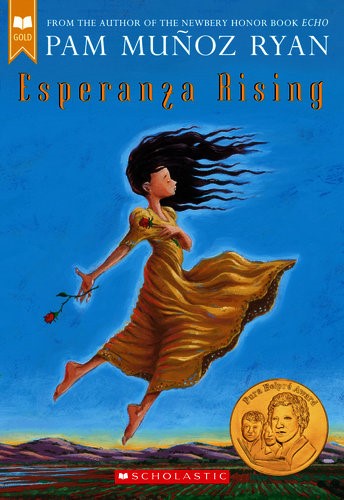
At first glance, Esperanza Rising by Pam Muñoz Ryan;2000; Book, is just seen as another children’s book, however, this novel has many layers to it that it goes beyond this expectation. The cover portrays a fair skin young girl, Esperanza de Ortega, whose long hair and yellow silk dress is flowing with the breeze. She is seen loosely holding a rose over a large plot of land that disappears in the distance, both the land and the rose hold much meaning in her life. I first came across this novel, thanks to the complicated system of school reading levels. Out of the limited number of novels that could have chosen from I chose Esperanza Rising. I saw myself in this novel, as if all that I had lust for at 12 years old was contained in this novel. However, what I would have not imagined that under many layers of meaning, hides a melancholic twist, as Esperanza mourns the death of her father throughout most of the book, she also mourns the loss of what her life used to be, developing a ambivalent relationship to the land, which in a way represent the changes in her life.

The novel depicts the life of Esperanza de Ortega, daughter of a wealthy landowner in Mexico, Sexto de Ortega who must go through different obstacles at a young age for her own as well as her family’s safety. The novel starts off describing Esperanza and her father connecting to the land, by attempting to hear its heartbeat. Ryan then goes on to explain the importance of the preparations for the harvest which terminate in Esperanza’s birthday. It is during this time that there is a large celebration in honor for Esperanza and the fruit harvested from the ranch. Up to this point Ryan, describes what happens every year and the illustrates happiness during this time. However, things get complicated when the Ortega family discovers that the head of the family, Sexto de Ortega has been killed.

This brings a variety of complications due Esperanza’s uncle who practically threatened the Ortega family if Esperanza’s mother, Ramona de Ortega does not marry him. To escape the threats, especially after the burning of their mansion Esperanza and Ramona decide to flee to California along with their former servants Alfonso, Hortensia, and Miguel. Esperanza’s grandmother had to stay in Mexico in a convent, as she healed from injuries caused by the fire. At such a young age, Esperanza experienced such a drastic life changed that affected her various ways, throughout most of the book she spends her time comparing of what her life once was and what she had to deal with now in the given circumstances, living in a Mexican labor camp. As she struggles with her own internal conflicts, she is faced with a much bigger issue in which her mother gets hospitalized and she is left to pay off medical expenses as well as for her grandmother’s voyage to California.

Melancholia can be seen creeping in here, beyond her father’s death but more precisely through the drastic changes she had to go through at 13 years of age. Her father represented what was good in her life and she lost all that when he left, at time she finds herself thinking what her father would have said of the living situation in the migrant camp if he was there. The death of her father goes beyond that just a loss of paternity for her, but it actually contributes to her loss of self. She compares what her life used to be when her father was around and what it is now especially when referring to birthdays. Esperanza explains how on her birthday there would be a process that would repeat each year from her favorite breakfast being served to the extravagant party thrown in her honor but the crucial part of each year where the porcelain dolls. Each year on her birthday she would receive one from her father. Esperanza treasures these dolls as she connects to them, she sees her own life reflected in their appearance. However, this now represents what her life will not be due to her given situation.

The land is also very important to consider here as it plays a crucial role in Esperanza’s persona. From a young age she develops a connection to the literal land and what it stands for, often seeking comfort and identity. Towards the middle of the book, Esperanza is seen falling into a deep state of melancholia, in which she begins question all that her life is and its worth stating, “Do you have some prophecy that I do not? I have lost everything. Every single thing and all the things that I was meant to be. See these perfect rows, Miguel? They are like what my life would have been. These rows know where they are going. Straight ahead. Now my life is like the zigzag in the blanket on Mama’s bed.” (Page 224) She begins feel once again these ties, the Ranch of Roses, her life, her plans, things that she has not brought herself to let go. Relocated in a migrant camp, she is safe and can start a new life but with everything going she can not help but develop an ambivalent relationship towards the land and her life in the United States.

Personally, I understand and relate to Esperanza’s melancholic views, since I had many transitions to due at a young age. Since I was very little I had to move from city to city and from country to country, leaving a piece of me within each place I went. This is something that immigrants from across the world can understand and relate to as well, as many of them are seen sacrificing everything that they are and have in search for a stable location to live a calm and safe life. They understand starting over, in a new place away from their traditions and what once was familiar to them leading them to overthink their past and incorporating this in their present lives instead of letting go.

It is surprising to find ideas such as melancholia in a children’s book and yet they are there in the catacombs of each dilemma. Esperanza’s struggles lead her to develop a melancholic relationship with the land and her new life in California, while mourning her life in Mexico as well as the death of her father. These ideas, however, are relatable to many especially the immigrant community and to those that lose themselves in the changes that life takes them.

Citation

Ryan Pam Muñoz. Esperanza Rising. Scholastic Press, 2018

“Esperanza Rising.” Booksource, www.booksource.com/Products/Esperanza-Rising__043912042X.aspx.

Prayers for Bobby (2009) by Leroy F. Aarons

Prayers for Bobby is a 2009 film that depicts the issues that queer individuals face when their families learn of their homosexuality. The film is based on the 1995 book Prayers for Bobby: A Mother’s Coming to Terms with the Suicide of Her Gay Son by Leroy F. Aarons which recounts the real-life tragedy of Robert (Bobby) Griffith who committed suicide in 1983. The film’s protagonist, Bobby Griffith, is a high school student who lives with his devout Evangelical family in the late 1970s. Bobby is contemplating suicide when his older brother Ed walks in on him and begs him to tell him the reason for his distress. Bobby confides in his brother that he thinks he is gay and asks that he keep this a secret from his conservative family. Ed betrays Bobby and tells their mother, Mary, out of concern for his wellbeing. Mary immediately seeks to “cure” Bobby of the affliction of homosexuality. Mary sends Bobby to a psychiatrist and forces him to participate in various church activities as well as setting him up on dates with girls. Bobby’s father and siblings eventually accept Bobby’s homosexuality while his mother refuses to do so and instead fervently attempts to “cure” him. Bobby did everything Mary asked him to in an attempt to reconcile their relationship, but nothing he did was good enough. This eventually led him to become very withdrawn and depressed because of the guilt he felt from his mother’s homophobia. His self-loathing became unbearable, and Bobby ultimately committed suicide by jumping off a bridge. Mary cannot cope with the guilt she feels as she thinks she is responsible for Bobby’s death. She seeks comfort from her church but quickly realizes the prejudiced and homophobic preachings of her church are of no help to her. She reaches out to the LGBT community, particularly the Metropolitan Community Church, and eventually becomes a member of the Parents, Families and Friends of Lesbians and Gays (PFLAG) organization and fights against homophobia in Bobby’s honor. This film is a prime example of the psychological damage that rejection has on a queer individual and the obstacles that these individuals face in the pursuit of happiness within a homophobic society.  

Bobby was not able to cope with his mother’s rejection and his psychological state deteriorated rapidly as a result. This is, unfortunately, something that many queer individuals experience as a result of the homophobic attitudes that surround them. In this particular film, the outcome is tragic and results in the death of a queer individual who was rebuffed by his mother despite his attempts to rationalize with her. He eventually reaches a breaking point and begs his mother to accept him for who he is. She refuses and she declares that she will not have a gay son to which he replies “Then you don’t have a son.” He then decides that his best option is to leave his home and make a new life for himself somewhere else where he does not have to feel constantly berated for being gay, but it quickly becomes obvious that he is not able to escape from her homophobia. After a year of constant homophobic preachings and remarks, Bobby had internalized this homophobia, making himself feel ashamed and guilty for being gay, making it impossible for him to find any solace in his new life away from his mother. 

Bobby’s pursuit of happiness was thwarted by his mother’s homophobic crusade to “cure” him. Bobby was a once vibrant young man who had a great relationship with his family until he could no longer deal with denying his own identity. Prior to his coming out, Bobby and Mary had a loving relationship, his siblings even teased him for being his mother’s favorite child. This all changed drastically when Mary’s homophobic beliefs led her to push Bobby away. Her idea that she could “pray the gay away” through conversion and therapy only ruined Bobby’s mental and emotional health. She constantly reminded him that he would end up in hell if he did not change. Though Bobby attempted to be happy by leaving his mother’s home in California and building a new life for himself in Portland he was ultimately unable to distance himself from her homophobia. Bobby was living a seemingly pleasant life with his cousin but his mother would not let him live in peace. She continued to persecute him by sending him pamphlets that claimed AIDS was God’s punishment for homosexuality, leading Bobby to feel incapable of being happy. This inability to achieve happiness is a common theme present in other queer works such as James Baldwin’s Giovanni’s Room. The protagonist in this story, David, is unable to live the life he wants because of the ambivalent feelings that stem from his internalized homophobia. Homophobic society has a profound impact not only on the psyche of queer individuals but on their ability to pursue happiness as it denounces queer individuals as unworthy of obtaining real happiness or love. 

The film depicts the severe impact that loss has on all individuals affected by homophobic attitudes. Throughout the film, we can see the love that Bobby has for his mother and the pain that he felt when he realized that she no longer loved him the way she did before. This feeling of loss contributed to the overwhelming psychological affliction that engulfed him and eventually led him to take his own life. There was one particular scene after Bobby’s death in which Mary is going through his belongings that I found to be a turning point in the film. She finds Bobby’s journal and reads the entries where he expressed his feelings of dejection and self-loathing as a result of her homophobia. He desperately wanted to win back his mother’s affection by doing everything he could to appease her, but nothing he did made him feel anything but rejection and hate on account of her religious beliefs. This is the moment in which Mary realizes that she was the catalyst in Bobby’s psychological turmoil and she sees the dangers of homophobia fueled by religion. She ultimately changes her ways and ends up fighting against the homophobic religious teachings she once staunchly defended. I found this aspect to be especially important because I see this behavior within my own Catholic family. They are very religious and often express their homophobic views which makes me angry not just at them, but at religion as a whole. It’s a difficult subject to address since religion can be a delicate subject but I’ve had many bad experiences with religion myself, as my parents forced me to attend retreats and prayer meetings for years, which led me to experience firsthand the bigotry and intolerant principles of religion. I think that Mary’s realization of the backward ideology preached by her own church is something that more people need to face particularly in this time where the LGBTQ community has gained more rights but is still suffering the impact of homophobia. It is important to realize that though we are living in a more progressive time, there continue to be individuals like Bobby who find themselves oppressed by homophobic families.

I think the fact that this is a true story makes the film even more impactful and makes the consequences of homophobia more genuine to the viewer. The pain that Bobby experienced as a result of his mother’s homophobia is palpable throughout the film and it emphasizes the message of the film. Mary’s radical change from rejection to acceptance is what strikes me as the most surprising element of the film. Religion is a central aspect of her and her family’s lives, it was something that brought them closer together until Mary used it as validation for her homophobia and rejection of her son. She was not able to realize the damage that it caused her son until it was far too late. Only after his death did she recognize the error of her ways and she sought to make things right by doing her part to prevent the spread of homophobia through religious teaching. I think the film conveys this message to its audience, some of whom may find themselves in the same predicament as Bobby as these feelings of melancholia and loss are experienced by many individuals upon coming out to their families. Homophobia continues to plague the LGBTQ community despite the progress made in the movement for equal rights. The psychological damage that rejection has on queer individuals needs to be addressed, particularly by conservative communities who consistently preach homophobic ideology. I think everyone, especially those who have a queer individual in their lives, needs to see this film in order to understand the tragic consequences of homophobia and the longlasting psychological trauma it inflicts on the queer community.

Works Cited:

  1. Aarons, Leroy F. “Prayers for Bobby.” YouTube, directed by Russell Mulcahy. 10 Dec. 2019, https://www.youtube.com/watch?v=sqIF50lSNVo
  2. Holzberg, Ben Mark. Photograph of Mary (L, Sigourney Weaver) hugging Bobby (R, Ryan Kelley) from the Lifetime Original Movie, “Prayers for Bobby.” The Press Democrat, 23 Jan. 2009, https://www.pressdemocrat.com/news/2259867-181/lifetime-tv-to-show-film
  3. Baldwin, James. “Giovanni’s Room.” Alfred A. Knopf, 2016.